
Rivs on “Contra Todo” and His Latin GRAMMY® Nomination
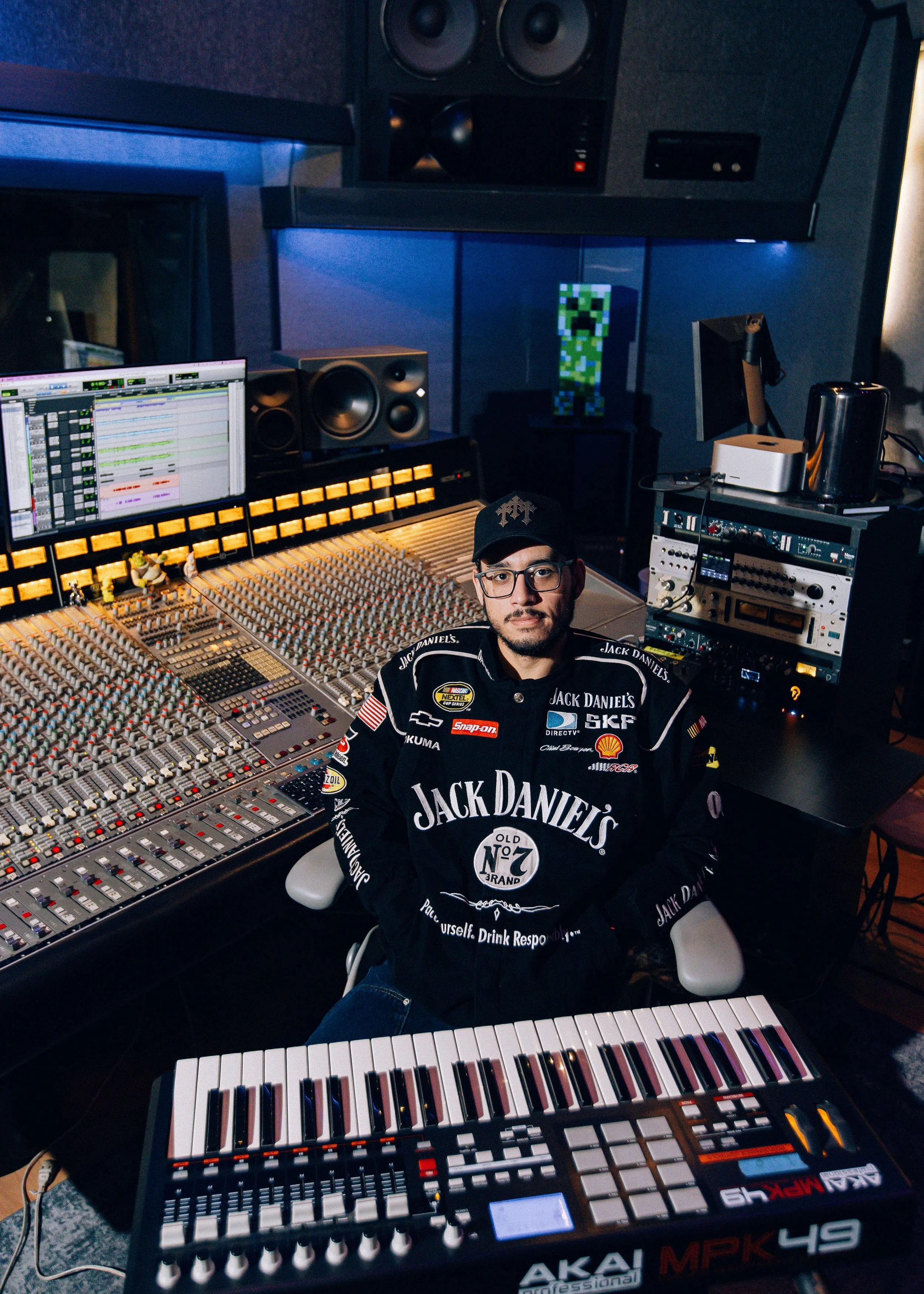
While making “Contra Todo,” Rivs was also producing for Thalía, Cazzu, and Sahir Montoya. His own EP took shape between projects, trips, and sessions that sparked new ideas and connected him with artists he wanted to collaborate with. That constant exchange between musical styles and ways of working helps explain his approach. Rivs finds possibilities in those encounters and turns them into songs under his own creative direction.
Across the six tracks on “Contra Todo,” he brings together Akapellah, Santa Fe Klan, Miguel Cornejo, and Nueva H, among other artists to explore different paths within Mexican music. As a producer, he imagines what each voice can bring and when it is worth taking an artist into unfamiliar territory. Now, with a Latin GRAMMY® nomination for Best Contemporary Mexican Music Album, he speaks with RIVAL about the thinking behind those collaborations, the responsibility of leading his own project, and the connections he wants to explore in his next chapter.
What did receiving a Latin GRAMMY® nomination for “Contra Todo” mean to you, especially as it marks a new chapter built around your own artistic vision?
After making an album with such a bold, creative, and new approach for a Mexican artist, receiving this nomination felt like a very powerful validation that the decisions we made were the right ones. I’m very happy about that because, at one point, I did have doubts about some of those decisions. Now, the nomination itself has reassured me that we made the right choices.
You had already won three Latin GRAMMYs as a producer. How does this nomination compare to those recognitions now that it’s for a project entirely your own?
The biggest difference is that before, I would look at the list of nominees and see the name of the artist whose album I had worked on. Now, it’s my own name up there.
On top of that, I’m now alongside artists I’ve previously shared nominations with, like Tito Double P and Peso Pluma. Just being there alongside them is already something huge for me and for my career.
Why did you choose “Contra Todo” as the EP title, and what does it represent about where you are in your career and the new chapter you’re stepping into as an artist?
The album faced a lot of problems, as every project does, but for the first time, I had to experience all of them firsthand and take full responsibility. If everything went wrong, it was on me, and if everything went right, that was on me too.
I got to see every detail up close and all the things that could potentially go wrong. For example, we had everything ready to shoot a music video with a large-scale production, only to have it ruined by bad weather and rain.
There were also a lot of people who didn’t believe in the project while I was making the album and working on each song, and that was very difficult. There was a lot of discouragement from people who, in one way or another, had been close to the project and eventually stopped believing in it.
I think that’s essentially what led me to call it Contra Todo. So many things happened and so many obstacles came up, but in the end, I managed to work through them. No matter how much it felt like I was going against everything, I was able to finish the album and put it out.

The EP brings together six songs and artists from different scenes. Why did you choose these collaborations, and how do you decide when a mix of styles works in service of a song?
After producing so many songs and albums, working with so many artists, and earning more than 100 platinum records through that work, I think I have a very clear sense of how I approach those decisions. When I take the creative lead and set a direction with an artist, I don’t choose a collaboration or bring someone onto a song just for the sake of doing it. I do it because I believe there’s something meaningful behind the idea and that it can become a really good song.
There’s also a curation of my own musical taste involved. That’s what leads me to choose a particular artist for a song, maybe take them outside of their comfort zone, or even bring together two artists who might not otherwise have collaborated and make myself the perfect excuse for that collaboration to happen. I think that’s ultimately how I make those decisions.
Through collaborations with artists like Akapellah, Santa Fe Klan, Miguel Cornejo, and Nueva H, what have you learned about the different ways contemporary Mexican music can be approached and shaped?
I’ve learned that all of the artists I’ve collaborated with understand that we can give Mexican regional music a sound that may not be the most conventional, but that people might need to hear, even if they don’t know it yet. Music that genuinely feels fresh and has a clear point of view.
Working with them has also made it very clear to me that, deep down, they’re artists who want to push ideas forward and do things differently, just like I do. I think that’s why we work so well together when we make music.
Do you have a favorite track on the EP, one that may have presented a bigger challenge or something along those lines? If so, which one?
I wouldn’t say I have a favorite. They’re all equal to me. But if I had to choose one that presented a greater creative challenge, it would probably be “Beso de Novela” with Juanes.
On that song, I’m working with a Colombian artist who comes from rock, but we’re making a Mexican corrido. So the challenge was figuring out how far I could fill the song with Mexican elements while still preserving the essence of this incredible artist and legend that is Juanes.
It was a production where every decision was made very meticulously to determine what belonged and what didn’t. We actually made four different versions of the song and out of all those versions, the one we ultimately released was the one that felt right. So I’d say “Beso de Novela” was probably the biggest creative challenge.
Considering that your work spans more than 400 credits, what did you learn from producing for other artists that you wanted to bring to your solo project?
What I’ve learned most from other artists is the way they walk into the studio and approach music; not so much as a job, but as the art form that it is.
After spending so many hours in the studio with different artists, I think I’ve always taken the best parts of those experiences with me, especially that desire to keep making music that never seems to go away. I’ve also learned a lot about the importance of supporting new artists. I’ve seen that firsthand with major artists I’ve worked with. They support those who are just starting out, and that’s something I do a lot as well because I learned it from them.
I think that dedication and the constant desire to keep making music are the biggest things I’ve learned from all of these artists.
The nomination recognizes “Contra Todo,” but it also comes while you continue producing for other artists. How do you find a balance between those two sides of your work?
It’s actually been easy because I never stopped being a producer. At the same time that I was making the song for my album with Sahir Montoya, I was also producing his entire album. While making this project, I was working with Thalía, Cazzu, and other artists. I’m flying to Miami, flying to Los Angeles, and doing everything at the same time, but it’s been incredible.
In fact, I think a lot of the things that have happened with my own music have happened precisely because I never stopped producing for other artists. On those trips, which aren’t necessarily related to Rivs, I find a lot of inspiration. I might discover a new artist and realize I want to create something with them for Rivs.
I’ve been able to manage my time really well because I’ve always been very organized, and even more so now. I think organizing my time day by day so I can get everything done is what has helped me the most. Sleeping well, staying healthy, exercising... all of that has helped me keep everything balanced.
As you continue developing your own work as an artist, what do you hope to explore or do differently in the next chapter of your career?
I want to keep doing what I’ve been doing, which is enjoying the music and the process. But I also want to make music with artists who aren’t necessarily Mexican.
I want to explore the Anglo music space and continue doing things on a bigger and bigger scale. I think everything went extremely well with this album, including the Latin GRAMMY® nomination, but I’m always looking for whatever comes next to be even bigger.
That’s what’s next for me: making the biggest thing I’ve done so far.
Follow Rivs on Instagram, TikTok, and YouTube for new music, updates, and a closer look at what’s next in his career.