
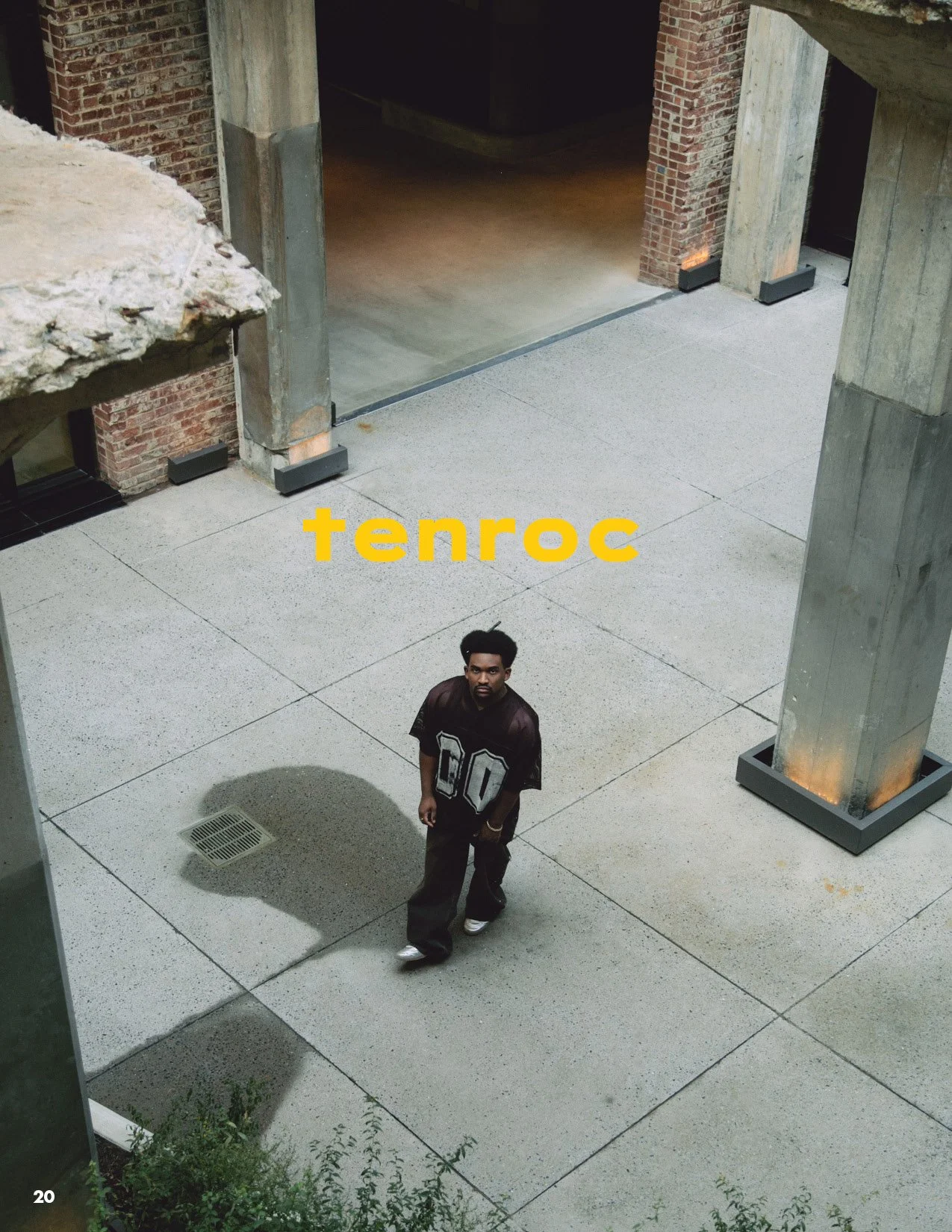
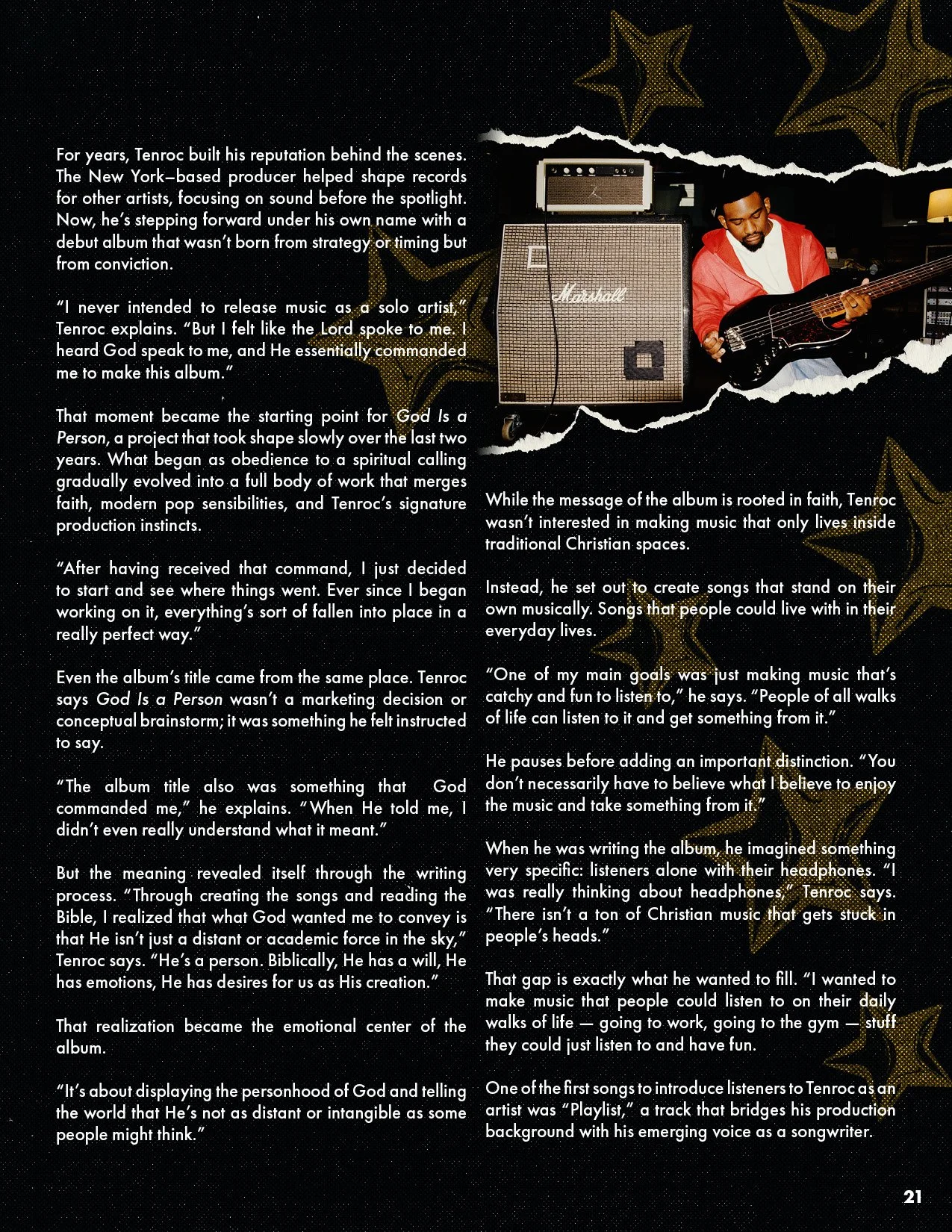
For years, Tenroc built his reputation behind the scenes. The New York–based producer helped shape records for other artists, focusing on sound before the spotlight. Now, he’s stepping forward under his own name with a debut album that wasn’t born from strategy or timing but from conviction. “I never intended to release music as a solo artist,” Tenroc explains. “But I felt like the Lord spoke to me. I heard God speak to me, and He essentially commanded me to make this album.” That moment became the starting point for God Is a Person, a project that took shape slowly over the last two years. What began as obedience to a spiritual calling gradually evolved into a full body of work that merges faith, modern pop sensibilities, and Tenroc’s signature production instincts.
“After having received that command, I just decided to start and see where things went,” he says. “Ever since I began working on it, everything’s sort of fallen into place in a really perfect way.”
Even the album’s title came from the same place. Tenroc says God Is a Person wasn’t a marketing decision or conceptual brainstorm; it was something he felt instructed to say. “The album title also was something that God commanded me,” he explains. “When He told me, I didn’t even really understand what it meant.” But the meaning revealed itself through the writing process. “Through creating the songs and reading the Bible, I realized that what God wanted me to convey is that He isn’t just a distant or academic force in the sky,” Tenroc says. “He’s a person. Biblically, He has a will, He has emotions, He has desires for us as His creation.”
That realization became the emotional center of the album. “It’s about displaying the personhood of God and telling the world that He’s not as distant or intangible as some people might think.” While the message of the album is rooted in faith, Tenroc wasn’t interested in making music that only lives inside traditional Christian spaces. Instead, he set out to create songs that stand on their own musically. Songs that people could live with in their everyday lives. “One of my main goals was just making music that’s catchy and fun to listen to,” he says. “People of all walks of life can listen to it and get something from it.”
He pauses before adding an important distinction. “You don’t necessarily have to believe what I believe to enjoy the music and take something from it.”
When he was writing the album, he imagined something very specific: listeners alone with their headphones. “I was really thinking about headphones,” Tenroc says. “There isn’t a ton of Christian music that gets stuck in people’s heads.” That gap is exactly what he wanted to fill.
“I wanted to make music that people could listen to on their daily walks of life — going to work, going to the gym — stuff they could just listen to and have fun.”
One of the first songs to introduce listeners to Tenroc as an artist was “Playlist,” a track that bridges his production background with his emerging voice as a songwriter. Producing music has always allowed him to evoke emotion, but lyrics opened a new door. “When I’m producing, I’m evoking emotion and a feeling,” he says. “But it’s different from lyrical content.”
With “Playlist,” Tenroc wanted the music itself to serve as a companion for listeners during difficult moments. “If someone is ever going through a hard time, this music is something I hope can turn that around.” Another key moment on the album comes with the song “Mourning 2 Dancing,” which explores the complicated space between grief and hope. The song took on an even deeper meaning after it was written. “I made that record about a year ago,” Tenroc says. “But recently, we suddenly lost my father-in-law. It really took a hit on our family because it was so unexpected.” At nearly the same time, his life delivered the opposite kind of news. “Around the same time, I found out that my wife is pregnant,” he says. “We had been waiting for five or six years.” Looking back, the song feels almost prophetic.
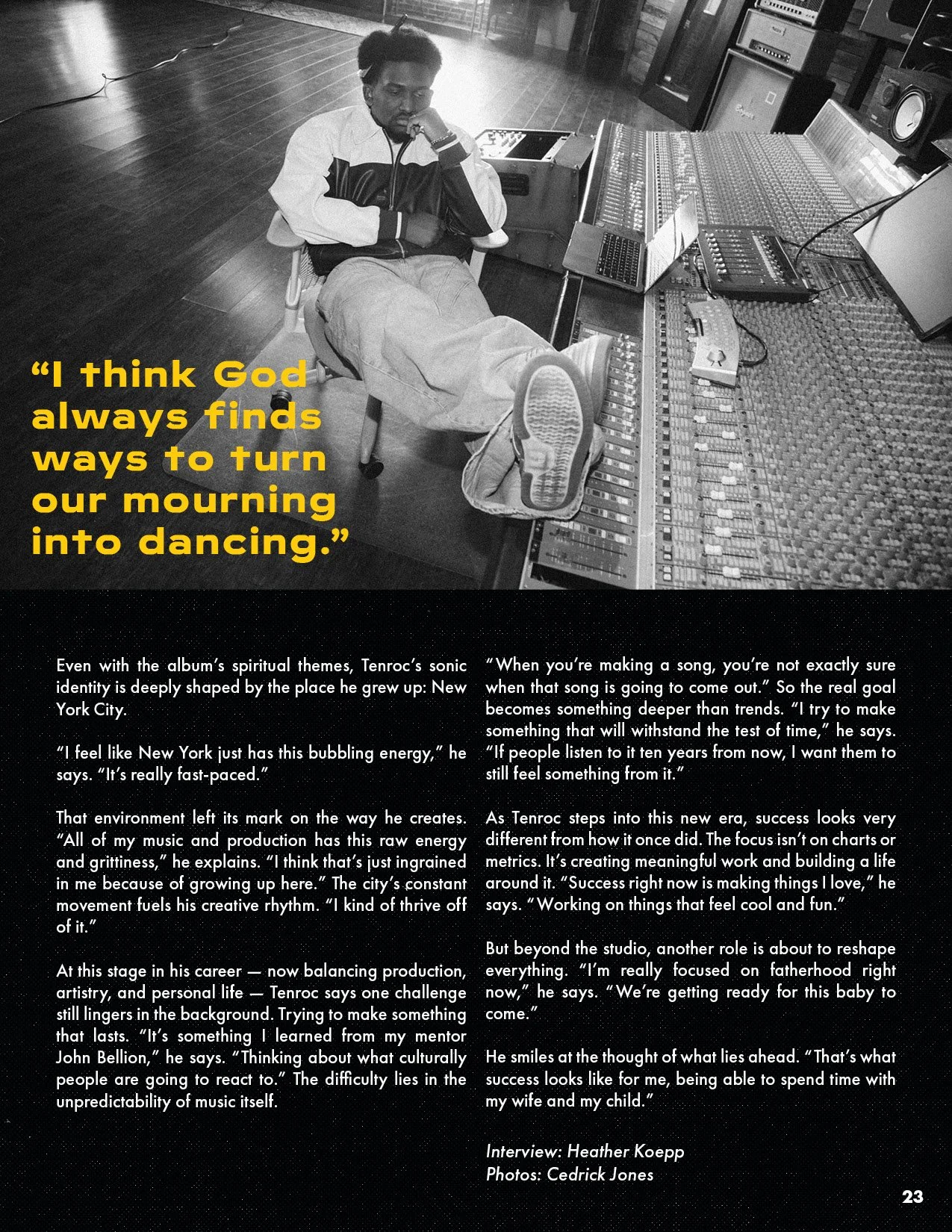
“I think God always finds ways to turn our mourning into dancing.”
Another highlight on the record features powerhouse vocalist Tori Kelly. The collaboration came together organically with help from someone close to him. “I had the chorus before I asked her to do it,” Tenroc says. “I was racking my brain trying to figure out who could sing it.” The answer came from his wife. “She said, ‘Why don’t you just get Tori?’ And I was like — wow, that’s perfect.” When Kelly sent back her vocals, the decision felt right immediately. “She brought this authenticity that I couldn’t replicate,” he says. “She just naturally has that soul and that gospel influence.”
Because of that shared foundation, the collaboration felt effortless. “She herself is a Christian, so it just worked out perfectly.”
Even with the album’s spiritual themes, Tenroc’s sonic identity is deeply shaped by the place he grew up: New York City. “I feel like New York just has this bubbling energy,” he says. “It’s really fast-paced.” That environment left its mark on the way he creates. “All of my music and production has this raw energy and grittiness,” he explains. “I think that’s just ingrained in me because of growing up here.” The city’s constant movement fuels his creative rhythm. “I kind of thrive off of it.”
At this stage in his career — now balancing production, artistry, and personal life — Tenroc says one challenge still lingers in the background. Trying to make something that lasts. “It’s something I learned from my mentor John Bellion,” he says. “Thinking about what culturally people are going to react to.” The difficulty lies in the unpredictability of music itself. “When you’re making a song, you’re not exactly sure when that song is going to come out.” So the real goal becomes something deeper than trends. “I try to make something that will withstand the test of time,” he says. “If people listen to it ten years from now, I want them to still feel something from it.”
As Tenroc steps into this new era, success looks very different from how it once did. The focus isn’t on charts or metrics. It’s creating meaningful work and building a life around it. “Success right now is making things I love,” he says. “Working on things that feel cool and fun.” But beyond the studio, another role is about to reshape everything. “I’m really focused on fatherhood right now,” he says. “We’re getting ready for this baby to come.” He smiles at the thought of what lies ahead. “That’s what success looks like for me, being able to spend time with my wife and my child.”