
Inside “Vigente”: El David Aguilar on Songs Without Genre Limits
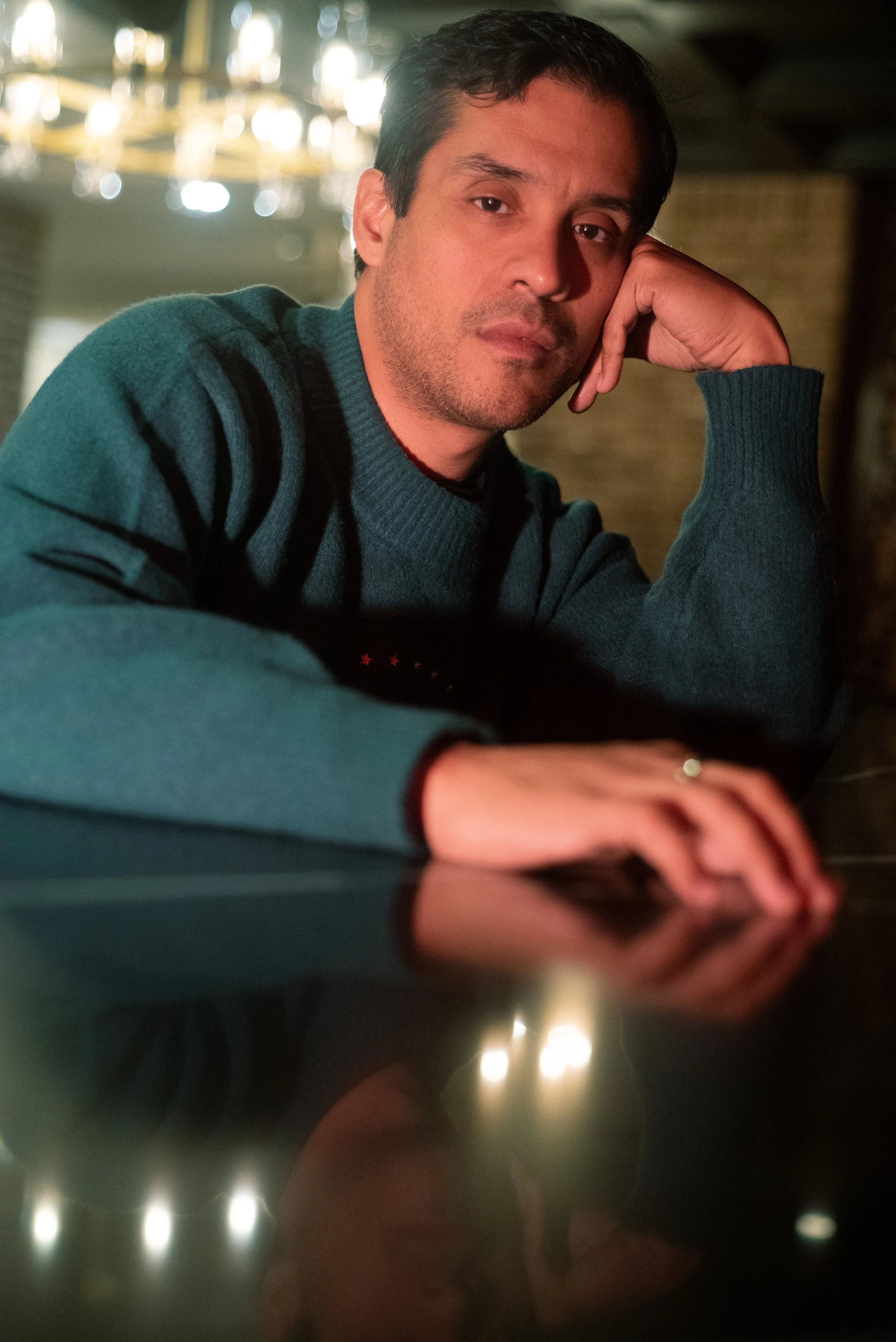
There is one idea that runs throughout “Vigente,” and El David Aguilar sums it up with a phrase of his own, “free songwriting.” The Mexican singer-songwriter sees composition as a space where genres should not function as limits but rather as tools that emerge according to what each song needs. That logic shapes this 15-track album, whose songs are not meant to sound as though they belong to the same era, rhythm, or style but instead coexist through contrast. That freedom does not dilute his identity. On the contrary, Aguilar argues that an artist’s voice, writing, and way of constructing a song ultimately become their personal signature, beyond any label.
That principle also explains why “Vigente” brings together collaborations that are so different yet so closely connected to his own story.
Julieta Venegas transforms “Lo Que Por Ti Yo Siento” into a dialogue about farewell and the lasting nature of affection. Jay de la Cueva appears on “Lumbre” after spontaneously connecting with the song before it was even finished. Mauricio Díaz “El Hueso” revisits with Aguilar a composition originally written in 2007, and his parents take part in “Corrido de los Cantantes,” a collaboration the musician describes as one of the album’s most meaningful gifts. At the same time, Aguilar is preparing to bring this new chapter to the United States with a tour set to begin on October 25 in Denver and continue through several cities across the country.
David, “Vigente” brings together 15 songs that move across different genres and musical traditions. How would you describe the album conceptually?
I describe it as an “anti-album,” which is what I call this type of work. All the projects whose titles end in “-ente” are part of that idea: Siguiente, Reciente, Vigente, and eventually Pendiente, which is a project that hasn’t been recorded yet but would come next.
They are “anti-albums,” and Vigente is exactly that: a collection of songs that aren’t necessarily connected to one another by time period, style, or rhythm. In fact, they contrast with one another. I like that feeling of having a collection of versatile songs.
One element that seems characteristic of your work is the belief that albums should be built through stylistic freedom rather than around a single sound. Could you expand on that idea?
From the moment I started as a singer-songwriter, I realized that I was drawn to songs with very different styles—from Mexican music to classical music, psychedelic rock, jazz... At first, I wasn’t sure how to feel comfortable as a songwriter while working across all of those genres.
So, from the beginning, I started writing songs in every direction and in all kinds of styles. I think that’s something that characterizes many artists of the 21st century: we realized that we could do whatever we wanted and that genres didn’t really matter. In my case, I’ve always loved having songs that contrast with one another.
I call this idea “free songwriting”: you make whatever song you want, however you want, without worrying about what your style is, because your style will be there regardless. You have your own voice, your own way of writing, and everything else is secondary.
The album includes songs such as “Lumbre,” “Lente Colectivo,” “Chance y Lance,” and “Corrido de Almas Suaves,” each with a different musical language. How do you decide which style each story or emotion needs during the songwriting process?
It’s something that emerges from the very beginning. When I have a thematic idea for a lyric, I can almost immediately sense what genre I’m going to use or what colors the song will have, and it happens without me really having to think about it.
Sometimes a song simply emerges as a ranchera—that’s just how it comes to me. Other times, I might be in a more energetic spirit, and a song comes out closer to rock and roll, and from there, the lyrics begin to come together with that sound.
It’s an integral process in which all the elements develop together—the style, the rhythm, the lyrics, the harmony, and the music. Everything takes shape almost simultaneously, like a sculpture.
“Lo Que Por Ti Yo Siento,” featuring Julieta Venegas, speaks about a love that remains even when a farewell arrives. How did the song come together, and what did you want to express about the lasting nature of affection?
That song came from feeling the need to have a song for saying goodbye. I attended the funeral of Cristóbal Jodorowsky, Adán Jodorowsky’s brother, and I was there to support Adán through that process. At the time, I happened to have a guitar with me because I was traveling to sing at Natalia Lafourcade’s wedding. Since I was on my way to the airport with my guitar, it coincided with his brother’s funeral, so I stopped by to see him. It was a very intimate setting, with mostly just his family there, and I had only intended to offer my condolences and spend an hour with him.
At one point, Adán saw my guitar and asked me, “Can you sing?” I said, “Of course,” and took out the guitar, but I honestly didn’t know what to sing. So I made something up and began improvising, using some verses from an unreleased song of mine called “Ventanas del Universo,” which somehow felt appropriate for that moment.
I felt that the song brought something meaningful to that moment. Adán cried—and that’s something he has spoken about himself, which is why I feel comfortable sharing it—but I was still left with this feeling that I didn’t have a song for an occasion like that. Even though I was able to be of some use in the moment, when I arrived at my hotel after the flight, I was left with this feeling that I had somehow fallen short as a songwriter because I didn’t have the perfect song to say goodbye with.
It was from that feeling that I began writing “Lo Que Por Ti Yo Siento.”
You have explained that your collaboration with Julieta also represents the time you have spent working together and the friendship you have built. What did she bring to the song, and what did you discover in the dialogue between your two voices?
She transformed the song. Originally, I had envisioned singing it on my own because it was such an intimate song, and it was also in a different key. We were still in the very early stages of production, and my collaborator Ulises Hadjis and I only had a very preliminary structure at that point.
Then I told Julieta, “Hey, I want you on my album. Sing one with me. I’m singing on yours, so now you owe me one.” [Laughs] She laughed and said, “Of course.” I showed her three or four songs, and she chose this one. I remember thinking, “Wow, this song is going to carry such an intense emotional weight,” because it already carried the whole story with Adán.
Her vocal range is very different from mine, though, so we had to change the key, and something really beautiful emerged from that. We adjusted the song and began shaping it around both of us and around the idea of singing it together. Julieta brought movement to it, a new perspective, and ultimately an even greater sense of care.
What her voice brings, above all, is a complete artistic complicity between our two voices. For me, the song also became a celebration of our friendship and our artistic collaboration, and that is something very beautiful.
“Vigente” also includes collaborations with Jay de la Cueva, Mauricio Díaz “El Hueso,” Voyou, and your parents. How did you choose the people who would join you on this album, and what did you hope each of them would bring to the songs?
It’s interesting because I didn’t really choose them. They simply came into the songs naturally.
Mauricio Díaz “El Hueso” is one of my songwriting mentors and one of my closest friends. He’s from the generation before mine—I think he’s about eleven years older than me—but I’m constantly learning from him, and we stay in close contact. To me, he’s the most interesting singer-songwriter in Mexico, so I follow his work very closely. He and I wrote “Chance y Lance” back in 2007. Just imagine how long that song had existed without us ever recording it. We used to sing it at parties, and there were even a few years when we toured together and performed it live. So when it came time to record it, I thought, “I have to invite El Hueso to sing this song.” It’s one of my favorite tracks, and that’s simply how it happened.
There’s a really beautiful story behind Jay de la Cueva’s collaboration as well. I had just started writing “Lumbre,” and we were going to Carín León’s birthday party. The day before the party, Jay, some other friends, and I were at a house passing the time and relaxing. I had actually been working on “Lumbre” on the plane. I started playing the guitar and singing the first verse, and Jay heard it. He had this little battery-powered keyboard with him, and before I knew it, he was already playing and singing along.
I ran into him again sometime later, and he had actually memorized that part of the song. I said, “Man, that song isn’t even finished yet. It’s still missing a verse,” and he said, “Yeah, yeah, but I really like it.” It felt very genuine to me that he had connected with the song. So once I finished it and was in the studio recording it, I thought it would be absurd not to invite him. Honestly, I had always imagined that I would. When I asked if he wanted to sing it with me, he said, “Obviously.” So that collaboration happened very naturally.
With Voyou, who is a French artist, it was much more circumstantial. I was at a songwriting session organized by Universal Publishing Mexico, and we happened to be paired together. He’s an incredible producer and multi-instrumentalist. He started creating some rhythms and beats, and I began writing. That’s how I wrote “Estefanía,” a song for the person who was my partner at the time, and I wrote it in English. It was my first venture into songwriting in English, so that collaboration really came out of that session.
I love it because Voyou belongs to this whole world of French indie and alternative music. I’ve literally spent maybe two hours with him in person in my entire life, but we’ve stayed connected through Instagram and online. When I asked him, “Hey, do you want to sing with me and write some verses for the end?” he said yes, and he ended up recording the entire production.
And then there are my parents... that’s the gift of ‘Vigente’ for me. As I tell you all of this, I realize just how meaningful it is to have them on this album. To me, it’s a metaphor for being a child, lying in bed between them and feeling sheltered and embraced. That’s what it represents. I invited them to sing because they’re the ones who taught me how to sing. So having them on “Corrido de los Cantantes” made perfect sense. For me, it’s one of the most beautiful things about the album.
Throughout your career, you have developed a songwriting style that pays close attention to both language and melody. At the same time, this era is marked by shorter songs, viral trends, and accelerated forms of consumption. How do you navigate that reality, and how do you protect the time and depth your songwriting process requires?
From the beginning, I’ve always liked engaging with the music industry while keeping a certain distance from it. Sometimes I get very close to it, and other times I pull away, but I don’t necessarily feel that I fit within the industry’s conventions.
I flirt with it. I listen to reggaeton, urban music, mainstream pop... I even study Karol G because I’m a fan, and I really like the way she writes. Whenever she releases a new album, I listen to it and study her songs because I think she has a very strong understanding of a certain kind of pop. I listen to Bad Bunny. I recently met Rafa Pabön in Spain—Jorge Drexler introduced us—and I’ve been listening to his music ever since and find him very interesting. I also follow what the artists at Rimas are doing, listen to trap artists from the U.S., and keep discovering younger projects. I keep all of that close to me, and I actually think those influences are beginning to make their way into my work.
But I’ve always felt more connected to folk and more experimental songwriting. I flirt with the industry however I can, but ultimately, I trust my gut and the need to express whatever it is I want to say, and I try to be honest with that. If a song needs to be eight minutes long, I don’t care—that’s what it is. And if it’s two minutes long and happens to be completely commercial, that’s fine too.
For example, there’s a song on this album called “Ten” that is very radio-friendly. I hear it, everyone tells me the same thing, and that’s simply how it came out—almost like an ultra-pop song. The same goes for “Chicle.” But then there are songs like “Pico de Gallo” or “Tragafuegos,” which are completely outside the industry and among the least commercial things you could possibly hear.
So, I don’t know... I flirt with the entire spectrum.
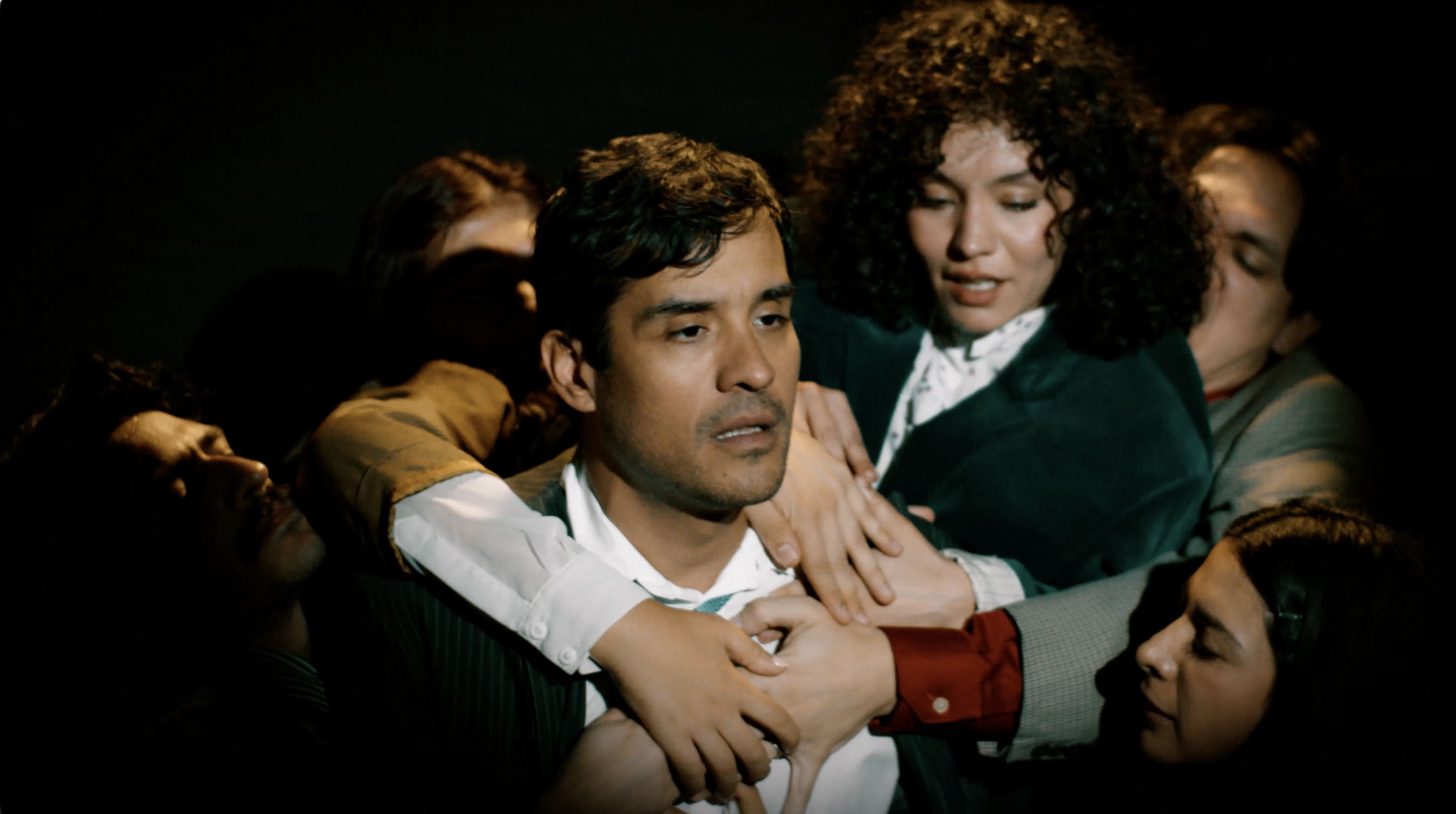
How do you currently view the relationship between music and social media? Do you think virality can help a singer-songwriter’s work reach new audiences, or can it also place too many limitations on the creative process?
I think it can do both. Virality can certainly help you. If something clicks with the algorithm, a song can suddenly take off, and obviously that can benefit you. The same can happen simply because people like a song and start sharing it.
But to be completely honest, I don’t know whether it still works in quite the same way today. I think that possibility was particularly evident in 2017, 2018, and 2019, but after the pandemic, our entire world underwent a much more aggressive process of digitalization, and something changed algorithmically. I think it can still happen—a song can take off on TikTok, for example—but broadly speaking, I feel that the digital infrastructure has become somewhat more constrained.
There are limitations as well because, in a way, artists can begin to feel that the size of their communities is determined by what the structure itself allows them to reach and that they somehow have to operate within those boundaries. If you have more opportunities in the physical world—if you go out and perform in a public square, for example—perhaps that’s different.
But that’s the impression I get from the digital world—and I say this with a certain degree of ignorance, but also from a kind of intuitive compass. I feel that there is a certain degree of containment as well. There’s so much competition, so many different interests, artists with different levels of resources, and different groups and companies involved. So I think the digital world is complicated, both from an economic and a social perspective.
In October, you will begin your first U.S. tour. What does it mean to bring “Vigente” to these stages, and what kind of live experience do you hope to create?
Being able to tour the U.S. feels like a huge celebration because it’s a country that inspires and nourishes me in many ways. I was just there—I spent last week in New York for LAMC, seeing a lot of friends and walking around the city—and so many people tell me, “I want to hear you play.” I also get messages from people in Chicago, Miami, Los Angeles... So this tour will be a way for me to discover what’s there for me. I really treasure that opportunity, and I’m incredibly excited about it.
As for what I hope to bring to the stage, I want to offer what I do best: something intimate, perhaps with a guest musician joining me onstage. It’s the song stripped bare and intimate. What interests me is allowing silence to remain present, even in a fast-paced song—not filling everything with layers, but leaving room for silence regardless of the rhythmic nature of the song.
After more than two decades of songwriting and a career marked by major collaborations and recognition, what do you feel “Vigente” says about the artist you are today, and where would you like to take your music in the coming years?
I feel that “Vigente” represents me from a place of maturity that feels very much connected to being in my forties. I feel as though I’m venturing deeper into the jungle. There are social concerns that I have and try to express through my songs, but there are also very intimate things, like “Estefanía,” “Lumbre,” or “Lo Que Por Ti Yo Siento.” The latter, for example, speaks to a kind of universal love.
So I feel mature and, in some ways, experienced. I think this is the first time I’ve really felt that way. Before, I still felt like I was searching or finding my way through certain things; now I feel a little more grounded. Vigente captures me at exactly this moment in my life, and that’s what it represents.
As for what comes next, I want to keep evolving through my songs. I have around five projects in the works—albums, anti-albums, a second volume of a Sinaloan banda record, a guitar-and-voice album with more of a folk approach, an electronic music album... I have so many things I still want to do.
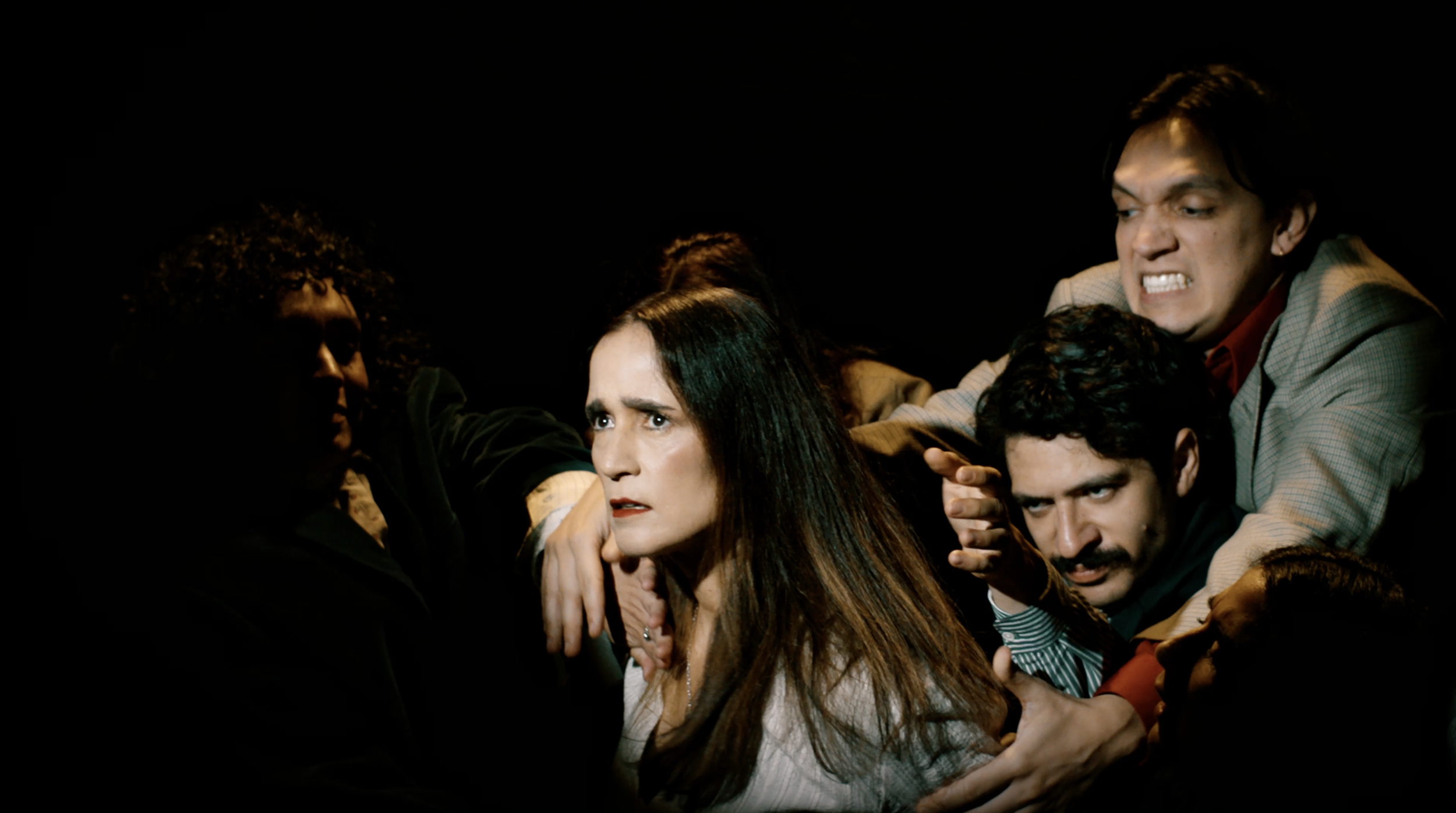
USA TOUR DATES:
October 25, 2026 | Marquis | Denver, CO
October 28, 2026 | The Monarch | Ogden, UT
October 30, 2026 | SFJAZZ | San Francisco, CA
November 1, 2026 | Mondavi Center | Davis, CA
November 3, 2026 | The Echo | Los Angeles, CA
November 5, 2026 | Reggies | Chicago, IL
November 6, 2026 | Joe’s Pub | New York, NY
November 15, 2026 | Judson’s Live | Orlando, FL
November 17, 2026 | ZeyZey | Miami, FL
Follow El David Aguilar on Instagram, Facebook, YouTube, and TikTok.