
CAMRYN: The World Just Hasn’t Heard Her Yet
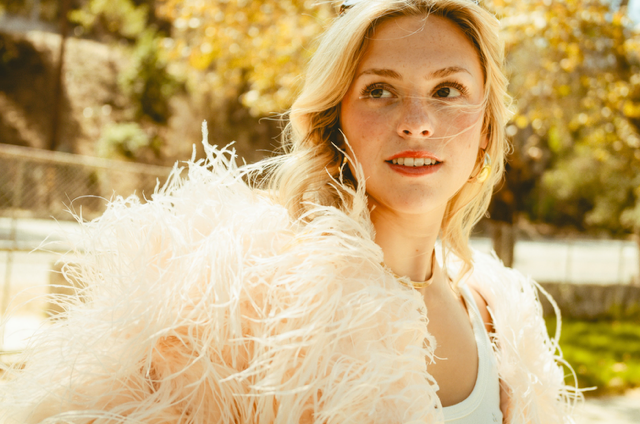
At 19, CAMRYN has already lived through the strange first chapter of being a young artist: experimentation, different sounds, and the search for an identity that actually fits. Then a comment from her mother on producer Jeffery David’s TikTok led to a writing camp, roughly 13 songs in a week, and a realization that changed everything. CAMRYN wasn’t trying to become a soul singer. She may have been one all along.
There are artists the industry introduces to the world with enormous machinery already humming behind them. CAMRYN isn’t one of them. Not yet.
There was no major-label A&R meeting that started this chapter. No elaborate scouting operation. No carefully engineered origin story. There was a TikTok comment. Her mother left it on a video posted by songwriter, producer, and manager Jeffery David. Jeffery clicked. Then he heard the voice. And something bothered him. Not because it wasn’t good. Because it was too good to still be searching for where it belonged.
Jeffery, what did you hear that made you stop?
Her mom had commented on something I posted on TikTok. I clicked over, found Camryn, and started listening.
I honestly couldn’t get over how amazing she was.
She had explored different musical directions, which is completely normal. She’s young. You’re supposed to explore.
But underneath all of it, I kept hearing the same thing.
This girl is a soul singer.
It was already there. The tone, the phrasing, the emotion, the way she naturally bends around a lyric.
I don’t think anybody needed to put soul into Camryn.
We needed to bring out what was already there.
Before meeting Jeffery, did you think of yourself as a soul artist, or did somebody else hear it in you before you did?
CAMRYN: I definitely gravitated toward soulful music and artists growing up. I sang with house bands when I was 10 years old just because I loved to sing anywhere I could. I would always request Etta James.
You had already explored pop, country, and other sounds. Looking back, do you think you were searching for your sound, or learning enough different languages to eventually recognize your own?
C: I was listening to all kinds of music, and inspiration came in every direction. I felt really drawn to folk music, and it was natural for me to write. I loved writing intentional lyrics, but it lacked big moments for my voice.
THE VOICE WAS ONLY THE BEGINNING
A remarkable voice can open a door. It doesn’t necessarily build a career. What happened next changed Jeffery’s understanding of the artist he had discovered. CAMRYN came to Los Angeles to write. Then she kept writing. And writing. Within roughly a week, the pair had generated around 13 songs. By the second day, Jeffery remembers pulling the 19-year-old aside.
Jeffery, what happened on day two?
JD: I remember being so blown away that I basically said, “Listen. Your voice is worthy of amazing songs.”
And I didn’t mean just catchy songs.
I started talking about songs like Bob Marley’s “Redemption Song,” Marvin Gaye’s “What’s Going On,” and Black Eyed Peas’ “Where Is the Love?”
I’m obviously not comparing songs we’d just written to some of the greatest records ever made.
I’m talking about permission and ambition.
Those records entertained people while actually saying something.
I realized Camryn has a voice capable of carrying something bigger.
She’s also an incredible writer.
That was the other surprise.
She’s prolific. Ideas just keep coming.
Suddenly I wasn’t thinking, “I found an incredible singer.”
I was thinking:
There might be a really important artist hiding in here.
What did you think when Jeffery started talking about Bob Marley and Marvin Gaye on day two? Did that excite you or terrify you?
C: It was definitely exciting because I had never explored that for myself. I want to share music because it’s what I love, but if I could share music to create change or create love, then that would just be even more fulfilling.
What do you actually care about enough to write about? What bothers you? What makes you angry? What gives you hope?
C: I love to write about everything. I used to only be able to write from my own perspective, but as I started to grow as a writer, I stopped putting myself in an imaginary box. Ideas usually come to me right before I fall asleep.
You’re 19. Do you ever feel underestimated because of your age?
C: I’ve never really thought about it. I feel like music should be ageless and timeless.
LAURYN. MARY. ALICIA. AND THEN CAMRYN.
The lineage matters. CAMRYN cites Lauryn Hill, Mary J. Blige, and Alicia Keys among the artists who shaped her understanding of soul. But imitation is precisely what this project is trying to avoid.
The challenge isn’t making a 19-year-old sound convincingly like 1998. It’s discovering what happens when the emotional vocabulary of those records collides with the life of a 19-year-old in 2026.
What did Lauryn Hill teach you about being an artist beyond singing?
C: She was authentic. She had a purpose beyond the music and used her platform for the greater good.
What do you hear in Mary J. Blige that you can’t learn from a vocal lesson?
C: I hear her having fun when I listen to her music. Maybe that wasn’t even the case when she recorded her songs, but you just want to dance and sing along when you hear her.
And Alicia Keys?
C: Alicia Keys really inspired me in the way she writes lyrics. They mean something beautiful, and she taught me how to pour my heart into a song and be vulnerable.
Those are enormous influences. Where does CAMRYN begin and the references end?
C: I feel like my music has more of a pop undertone and hints of my folky song premises. Taylor Swift and Kacey Musgraves are two big influences for me as well, and it definitely creeps through the lyrics.
PUT HER IN THE ROOM
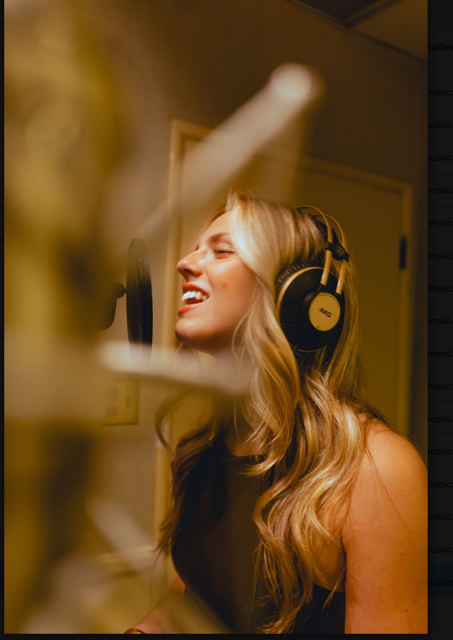
Jeffery made an unusual decision for an emerging 19-year-old artist. Before chasing samples, programming and production tricks, he wanted musicians. Real ones. In a room.
CAMRYN recently entered 64 Sound in Los Angeles with a band including drummer Gregg Bissonette and bassist Nick Campbell, surrounded by live keys, horns and musicians tasked with doing something increasingly uncommon in pop production: Listen to each other.
Jeffery, why spend the money and take the risk of doing this live when you could build almost everything yourself?
JD: Because I wanted something to happen that I couldn’t control.
That’s my roots.
I’m a keyboard player. Jazz was a huge part of my musical education. I’ve produced records a hundred different ways, but I still love musicians reacting to each other.
You can make everything perfect now.
Perfect isn’t necessarily interesting.
So we put incredible musicians around this 19-year-old girl and let them play.
And she belonged there.
That mattered to me.
You’re standing at a microphone surrounded by musicians who’ve played thousands of sessions and stages. Were you nervous?
C: No, I was very comfortable. I love playing with real musicians. They were all incredible people too. It was just so fun for me to be in that experience. All I felt was gratitude.
Was there a moment during the session when you thought, “Wait, this is MY record”?
C: After every take, I felt so lucky to have been in the position of recording at a beautiful studio with world-class players. It was something I’ve never created before, and everything felt like a dream.
THEN THEY STARTED BREAKING IT
Recording the live band wasn’t the destination. It was raw material. Jeffery is now deliberately colliding those performances with hip-hop programming, 808s, samples, synths, strange textures, and flashes of the ’90s.
The mandate has become almost comically simple: Break a rule on every song.
Jeffery, why risk messing up something that already sounds great?
JD: Because great isn’t enough.
And I mean that with love.
You can put amazing musicians together, record them beautifully and make an incredible soul record.
But she’s 19.
This needs to belong to her generation, not mine.
So now we’re experimenting.
A ’90s hip-hop-ish loop underneath Gregg.
An 808 against a real bass.
Something sampled against beautiful horns.
Something ugly against something pristine.
Maybe everybody disappears unexpectedly.
Maybe an ending gets weird.
Maybe the thing you’re technically “not supposed to do” is exactly what gives the record its identity.
We’re keeping the humanity and then disrupting it.
Safe is crowded.
Jeffery says every song has to break at least one rule. What’s a rule YOU want to break?
C: I want to break the rules of only being 19. I like writing about feelings and situations that will make sense at every age. I love being 19, but it doesn’t limit me to certain experiences.
Which song currently feels most like the artist you’re becoming: “19 IN NEW YORK,” “FLIRT,” “LOVE ME UP,” “TOTAL BABE” or “SHARE THE DIFFERENCE”? Why?
C: “LOVE ME UP” has become my favorite song. It is inspired by real experiences, so it feels fun to relive those moments when I sing the song.
JUST CAMRYN
And then there’s the name. The surname is disappearing. No alter ego. No elaborate typography trick. No invented character. Just CAMRYN.
You’re dropping your last name professionally. Why CAMRYN? Why now?
C: I feel like it represents the change in my music style, and I want a different identity for my music to separate myself more and focus on creating art outside of me.
Does losing part of the name feel like becoming somebody new or getting closer to who you’ve always been?
C: It feels like I’m getting closer to who I’ve always been. Almost like I’m creating a new identity and committing to that.
Get to know more about CAMRYN on Instagram.