
Meet The Vitals: In Conversation with The Latest Crucial Export from Winnipeg’s Genre-Bending Underground
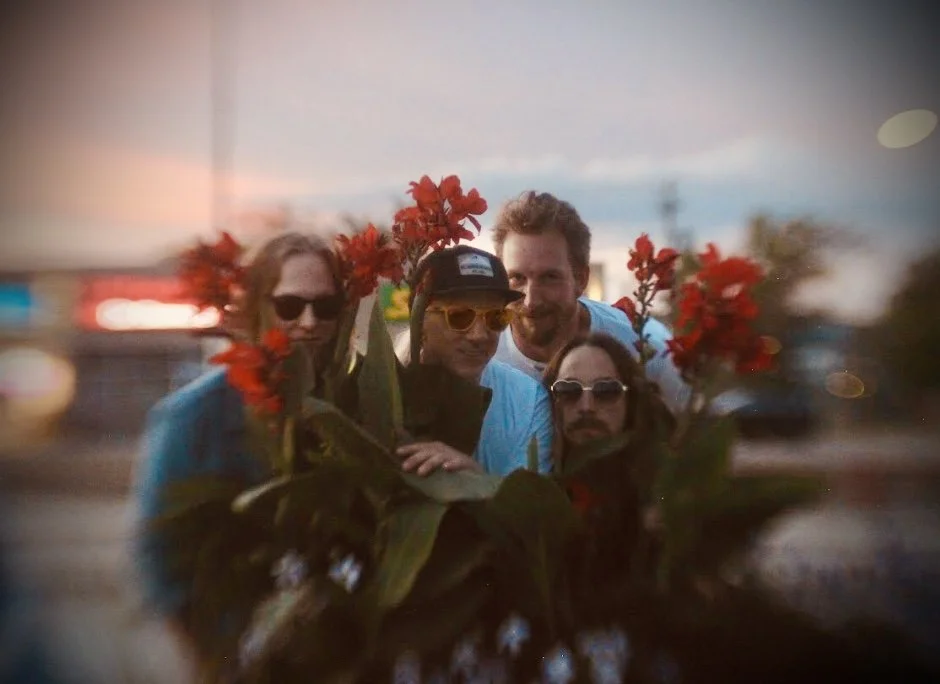
Indie rock band The Vitals are rejecting the polished, playlist-oriented approach of modern indie music. Recorded using a vintage Soviet tube microphone to capture their live energy, their new single, "Idea of You," relies on linear drum patterns and loud, unpolished instrumentation.
Instead of following a traditional album rollout, the band has committed to a strict schedule of releasing one new single every month throughout 2026 and 2027.
The band's approach is heavily shaped by the isolation and collaborative nature of the Winnipeg DIY scene. For The Vitals, small, unregulated basement shows offer an authentic human connection that large commercial venues cannot replicate. In this interview, band members Jimmy, Rob, Pat, and Sean discuss the recording process behind "Idea of You," their aggressive monthly release strategy, and why they prioritize authentic performance over social media trends.
How did "Idea of You" come together, and how did you get that live-room energy onto the recording?
Jimmy Shand: I can’t remember exactly who initially brought the ideas for this song to the table, whether it was just a riff or a full or semi-complete structure, but what I can remember is Sean asking me to “play a beat that isn’t, like, a regular beat?” which then led to that linear drum phrase during the verses.
Rob Hill: I think Sean came in, hitting that opening chord over and over, and we just riffed on it. I always try to shove as much emotion into my guitar sound as possible, likely because I can’t really play it. We owe a lot to Ben Hampson, who got our vibe and mixed it…and an old Soviet tube microphone that constitutes about 70% of the recordings' live sound.
Pat Ross: “Idea of You” was written very quickly with very little thought, really an energy in the room kind of a thing.
Sean: “Idea of You” was one of those songs that just came together fairly quickly. It all started with that one chord I started playing off the top, then Jimmy and Pat added the drums and bass, which kept it tight but also gave you that on-edge kind of feeling. The coolest part of this song for me, anyway, is Rob's guitar playing. It's arranged really well and something I never would have thought of writing myself; it definitely makes the vibe. We love an epic ending, and that was a fun add-on.
How do you pull from those early-2000s indie rock vibes without just sounding like a throwback band?
Pat: I don’t think we are trying to sound like anything for the most part. It’s interesting to me to hear what it sounds like to people.
Sean: Weirdly, we never talk about or plan to sound like anything specific, but obviously, influences shine through. We have a lot of common ground musically, but also are all over the map with our tastes, so I think that helps give us an original sound.
You guys mention, "The basement show is still sacred." What is it about playing in such a location that you can't get anywhere else?
Jimmy: There’s something sacred about a basement show because it strips music back down to its most human form. No barricades, no green rooms, no distance between performer and witness. Just bodies in a room, sharing heat and breath and vibration. The intimacy of a small space leads to an energy exchange that’s unrivaled in a large room. You’re almost forced to make eye contact with members of the audience because there’s no getting away from that. They can feel your sweat. That proximity breeds connection.
Compared to a larger room, the music often becomes a spectacle. In a basement, it becomes communion. The room itself feels alive: ceiling tiles rattle and fall, amps crackling against a concrete floor, strangers shoulder to shoulder, leaning against each other/bookshelves/washing machines while the bass drum rumbles through the house. It’s imperfect in the most perfect way. Basement shows rely on closeness. You don’t just observe a basement show; you sit inside them, whether you’re a performer OR viewer.
There’s a deep vulnerability about it. It removes the illusion of performance. There’s nowhere to hide; every missed note, every cracked voice, and every dropped stick becomes part of the ritual. That honesty is what makes it transcendent. The audience doesn’t seek perfection; they’re looking for proof that they’re alive in the same room as you.
For a few hours, the outside world dissolves. Life (rent, jobs, relationships), all of it fades away while all fall in step to the same rhythm. Music was never meant to be a background track for endless scrolling. It’s a physical force—meant to move air, bring people together, and unite a room of strangers in a single, shared voice.
These spaces are sacred simply because they don't last. A basement gig leaves no polished archive, just memory. Without massive productions, you're left with the raw basics: sweating windows, buzzing eardrums, and the feeling that for one night, a cramped room became the center of everything.
Pat: I agree with Jimmy. It’s much more intimate, and therefore, when it’s good, it’s really good; the audience and performers feel it more deeply.
Sean: Small venues are always better, it seems. That show specifically was hilariously tiny (Pat couldn't stand up), but I think you feed off everybody instantly, and you just enjoy it. There's no second-guessing or worrying about mistakes; we were just in a kind of flow state the whole time, which can be hard to find in bars or bigger venues.
How has coming up in the Winnipeg DIY scene shaped the way you guys operate and treat making music?
Sean: We're definitely lucky to live in a city with so many talented musicians and artists. I've had friends visit from big cities (London, Toronto, for example), and they are always blown away by the talent here. It's a labor of love, and that's really what it comes down to. We hope we're still doing this when we get our senior discounts, haha.
You've shared the stage with bands that sound totally different from you, like Tunic and By Divine Right. What have you picked up from playing with acts outside your exact genre?
Sean: Weirdly, we don't really fit into any specific scene completely, so we find ourselves playing with different bands quite often. I think it's good to have that variety at one show instead of 3 or 4 bands that sound the same, which makes things a little more interesting. Although admittedly sometimes harder to market.
Rob: There is an appreciation of good music regardless of genre in Winnipeg. I’ve never been to a place with a higher quotient of musical and visual arts talent. It is created by proxy of Winnipeg's brutal winters, immigrant roots, and isolation. You truly suffer for your art here, and it pays dividends in this city's creative output. We and most other musicians here have played with extremely diverse artists. Performers and audience alike here care less about niche, buzz, and marketing; but rather, is it good? Is it interesting?
The long answer is we’ve learned to just be open to diverse creative influences; don’t box yourself in and appreciate/make what inspires you.
Pat: It doesn’t seem to me like we are that different, but if we are, I think that’s good. I find I really enjoy listening to a playlist of songs that is all over the place, as that highlights the uniqueness of each song. I want new flavours, new adventures, and new feelings.
Dropping a new song every single month through 2026 and 2027 is a wild schedule. Why did you decide to put music out this way instead of doing a traditional album rollout?
Rob: We need deadlines, or we’ll never do anything
Pat: We thought there would be a better chance of people hearing the songs if we put them out one by one, giving people the chance to catch the next one if they missed the last one.
Sean: We wanted to challenge ourselves and just get more out there. We found that there was a bit of a disconnect between how much we write and how much we release. Releasing singles instead of an album, we think, is a fun way to stay engaged and connected to an audience. I'm sure we will collect them on an EP eventually, but for now it's fun to write, record, release, and repeat.
With that many tracks coming down the pipeline, are they all cut from the same cloth, or are we going to hear you guys experiment with some weird, unexpected directions?
Rob: Yes and no? I think we’ll always sound like us as much as we experiment. We’re slowly gravitating towards more synth-heavy arrangements as well as hopefully incorporating electronic elements.
Pat: Part of what makes this way of working (putting out a song at a time, ongoing) exciting is that we will be in the studio again and again and will be able to work with fresh ideas, feelings, and methods. One of my goals most certainly is to try new things and create music that sounds and feels different from our previous output.
Sean: I feel like our clothes are always changing, haha. We're very lucky to have access to such a beautiful space with a lot of cool gear, so experimenting is always on the table. I, for one, would love to have a 5-minute jazz freakout, but only time will tell....
A lot of modern indie music feels pretty sanitized and polished for TikTok or playlists. Is keeping things loud and a little messy a conscious choice, or is that just what happens when the four of you plug in?
Rob: I appreciate modern artists having to play that game, but we’re not interested. There’s too much Grant Rock and insipid shit out there. Too many buzz bands that can’t hold your attention live, just acting like the lead actor in their own little movies. You know it when you see it; grifting to the gram, trying to be what they think they should be. Make weird shit with only what interests you in mind and keep it feeling like real humans in a room. Too much inauthenticity. You see/hear something real now, it hits you like a truck.
Pat: I don’t think we have any consideration for what is going to happen with our music when we are making it. I think we just want to hang out with each other and have fun creating.
Sean: I do think it's just what happens when we play together. It's a bit of organized chaos, I suppose, but hopefully in the best way possible. Not that we would turn down a polished hit, haha.
With a ton of new material dropping every month, how are you changing up the live set to keep things fresh for people coming to the gigs?
Rob: We're focusing on writing this summer with shows in the fall
Pat: I think we will just be trying out material, playing what we like, and seeing what people respond to. I hope to get material that will be surprising to people.
Sean: We love the idea of having something new for every show, whether it be an original or a cover. I think people just want to come see something honest that you put some love and effort into, and hopefully it turns them on to something different.
Follow The Vitals on Instagram for more!