
INTERVIEW: La Coreañera finds home, freedom, and belonging in “KOREAKUMBIA”
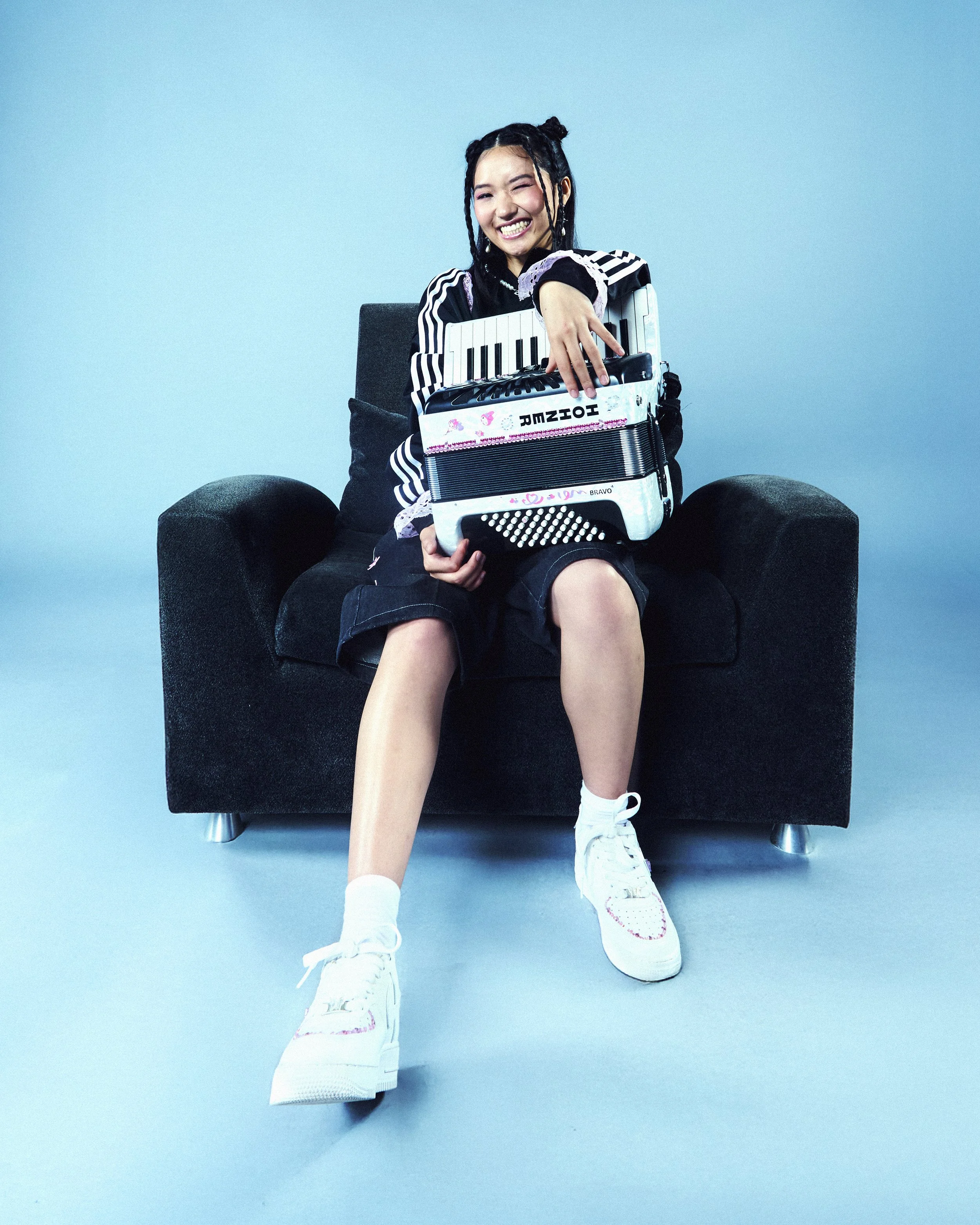
La Coreañera did not come to cumbia as someone dressing herself in a foreign sound, but as someone who found a place where she could breathe with more freedom. Before becoming one of the most singular voices in the alternative tropical movement, Abigail Pak came from a rigorous classical background, shaped by competitions, formal stages, and a discipline that even led her to perform at Carnegie Hall at age 13. But in parallel, cumbia was already there, in her home, in her hands, in her desire to play the accordion, to dance, to say something of her own, and to feel an immediate response from the audience. That shift became a way to move closer to a kind of music synonymous with celebration, community, and expression.
With “KOREAKUMBIA,” La Coreañera gives a name to a key stage in her artistic life. A tribute to identity and everything that built it, the song weaves together her Korean heritage, her years split between San Antonio and Mexico City, sonidera culture, the accordion, the discipline she absorbed at home, and an unshakeable need to make music that moves people.
All of that and more comes through in what she shares below, from her origins and the birth of her name to what it means to be a female accordionist in a male-dominated scene, her collaboration with Los Mirlos, and how cumbia became, for her, a broad, living, and shared language.
Abigail, you started playing classical music and even performed at Carnegie Hall at age 13, and then suddenly cumbia. Do you remember the exact moment you decided to switch from the classical piano to the accordion and tropical rhythms? What did cumbia give you that you did not find in classical music?
I think everything, in a way, happened around the same time. When I started playing piano, I also started playing the accordion shortly afterward. I was still going to piano competitions and taking classical music very seriously, but at home, I was already playing cumbia for myself. I did not have my project yet, and I was not performing, but cumbia was always important to me. Later, I started getting opportunities to play the accordion in the classical world. I had already been to a couple of sonideros as a guest, playing with DJs and things like that, and then orchestras would also invite me to play accordion. We would play cumbia, but in an orchestral version.
I thought that combination was really cool, but what I truly wanted was to play with other musicians, like the cumbia groups that perform live, and to have the freedom to dance on stage and feel everyone dancing together. I wanted the creativity to say what I wanted to say and dance the way I wanted to dance. That does not mean you cannot dance on a classical stage, but it is a very different kind of space. The audience is very different, too. I realized that when I started performing as La Coreañera. When I played with orchestras or as a soloist, the audience did not react the same way a cumbia crowd would.
It is not a bad thing or a good thing; it is simply different. In a classical music hall, everybody stays silent until the end, and then they clap. They do not say anything else. That is normal, and it is considered etiquette. It has been that way for a long time. What surprised me about the difference between those audiences is that a cumbia crowd is very reactive. When I perform as La Coreañera, I can say one thing, and everybody screams or responds. People are smiling, laughing, dancing, and putting their hands in the air. In danceable genres, the audience reacts in a very immediate way.
In classical music, you do not know what people are thinking until the very end. You may not know until you leave the concert hall and someone tells you, ‘Hey, you played kind of badly today,’ or, ‘I heard a mistake.’ People can be very critical. That does not mean there are no critical people in cumbia, and there is still a high standard, but sometimes I felt that the classical competition space was very intense. I think it came from the pressure of being a little girl in that world. It can be very competitive, with people stepping on each other and becoming very individualistic. There was a lot of pressure on me to do well, and sometimes that pressure was handled in unhealthy ways. I think many classical musicians are aware of this issue: mental health, the lack of awareness from people in charge, and the fact that this is a very hard process to go through when you are constantly being compared to others and made to feel replaceable.
In cumbia, I found a space where I could be more creative and say, ‘Okay, I do not feel like I am competing with somebody. I have my colleagues, and we support each other.’ That does not mean there are no problems in cumbia; there is drama everywhere. But I felt a sense of fellowship with my musicians. We are a team, and we are not comparing ourselves to other people. We have our own sound. We are not only playing someone else’s music. It is also beautiful to play from a score and perform an old piece from a long time ago. I love doing that. But there is something special about having your own group, having the freedom to do what you want on stage, and feeling the audience react to it.
There will always be people watching and thinking about what you are doing wrong. That exists everywhere. But the difference I have noticed is that when I play a cumbia show as La Coreañera, maybe my teacher is in the audience and says, ‘Good job. Next time we meet, maybe we can work on these things.’ In classical music, I have noticed that when I get off stage and go into the audience, sometimes people say, ‘That last note was not very good.’ They focus on very small details in a way that I do not see as much in other genres. That kind of cold criticism is very common, and maybe I was used to it when I was younger. But now that I am also in tropical music, I feel like saying, ‘You guys need to relax a little bit.’ People are not perfect. There needs to be room for expression, mistakes, and humanity.

Your heritage is Korean-American. You were born in San Antonio and now live in Mexico City. How was the name La Coreañera born, and how did you manage to make all those cultural identities coexist in your musical proposal?
The name Coreañera came from people commenting on my social media. They would say ‘Coreañera’ because I looked Korean, but I did not speak the way they expected a Korean person to speak. Maybe they were expecting a Korean accent or something like that. At that point, people still did not know where I was from. So they would say, ‘Coreañera, because she looks Korean but talks like a ñera,’ referring to a culture from Mexico, specifically from Mexico City and Estado de México, connected to barrio culture. They said I spoke a certain way and looked a certain way. They gave me that name, and I thought it was funny. I took it and said, ‘This is a really cool name.’
Then I started to realize that this was my project, and everything I had lived as a child was also being communicated through it. I am Korean because of my parents, and that is something I grew up with. It is the culture I had in my household, and many of the personal values I have today come from that. Even some of my musical tastes are things I share with my Korean family. But spending so much time living with and around Mexican culture and Mexican people also shaped me culturally, because that happened when I was young. I am still young, it is still happening, and every day I learn something new.
I have tried to combine these two cultures and have the best of both worlds. In the context of my music, I think the most Korean thing about my project is the way I like to work, not necessarily the sound. It would be cool to bring elements of Korean music into my work, and I would love to experiment with that. But I think the most Korean part of my project is the way I think and the way I work. Honestly, it has sometimes created culture shock with the people I work with. They ask, ‘Why are you like this?’ or ‘Why do you do things this way?’ And I say, ‘My parents raised me to work this way.’ A lot of it is discipline, being strict with yourself, and sometimes putting too much pressure on yourself. But it is also a mentality that has helped me become who I am, strive for excellence in the music I make, enjoy tropical music and what I can dance to, and make it completely, one hundred percent me.
Let’s talk about your new single, “KOREAKUMBIA.” Why did you decide to give it that name, and what does this song represent for your career at this moment?
When I was making “KOREAKUMBIA,” I felt so satisfied with the sound of the song that I decided to give it that name. If I am La Coreañera, then there has to be a “KOREAKUMBIA” among my songs. I said, ‘This is the one,’ not because it is the best song I have made so far, but because it is the one that has started to represent me the most. It feels like the beginning of something, not the final product. I am really excited about it because I think I now have a clearer idea of the sound I like and what I want to portray in my project. I named it “KOREAKUMBIA” because I felt it was the representative song of this time and this phase of my life. I know everything is temporary, and I will keep growing and learning, but for this phase of my life, I wanted to give it a name. That name is “KOREAKUMBIA” because it marks the beginning of developing my music.
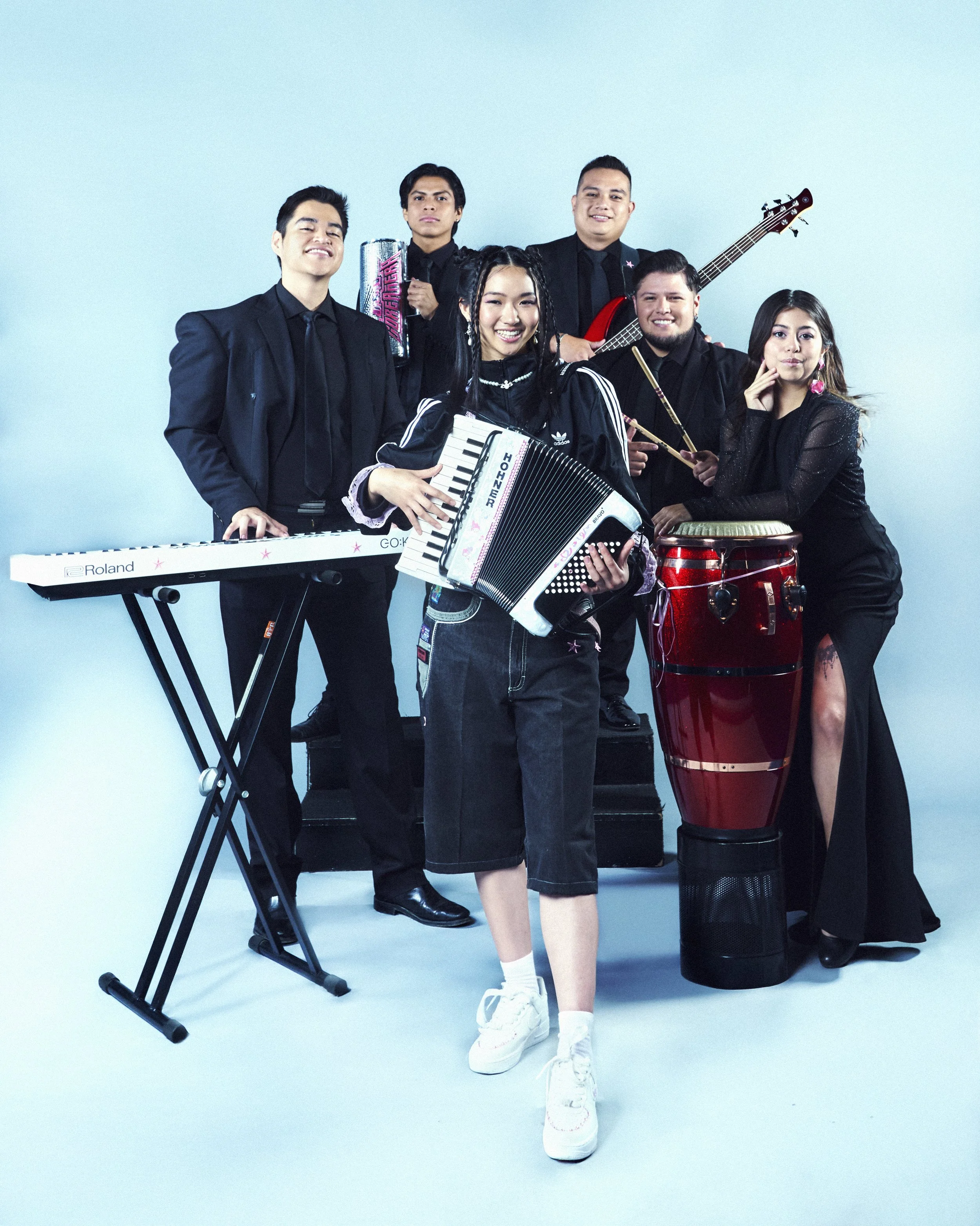
From your perspective, Abi, how has the public reception been regarding you playing cumbia? Since the fans already named you, I think they love you, but from your perspective, how do you feel?
I have received so many amazing comments and so much support from people and fans. My favorite kind of support, in the fan context, comes from other musicians, because I can see how hard they work, and sometimes they tell me, ‘I watch you because you inspire me.’ Those words are very special to me. It is not something I ever expect to hear from someone I do not know. It is amazing to hear that from another musician, from a young person, or from someone who loves music.
In general, the reception to my project has been very positive, and I feel very grateful for how things have been. There is always a negative comment or someone saying, ‘You do not deserve to be here,’ or things like that. I think those negative comments come from ignorance because cultural fusion is a very important part of my life. Everything I am, everything I have learned through my experiences, the places where I have lived, and the people I have lived with. I think a lot of people may not understand that, and I do not expect them to. But there is criticism around it, and many times it is racism. People make negative comments simply because I am Asian or because I look a certain way. That is why I try not to give importance to those comments, because I know they come from ignorance.
You participated in “La Pena” with Los Mirlos, who are a cumbia institution. What was it like to collaborate with them, and how does it feel to receive the endorsement of legends of the genre while being an artist from the alternative scene?
Working with Los Mirlos was really cool because I already knew their music, even though I did not know them personally. I had listened to them for a long time. Their type of cumbia may not be as common here in Mexico, but they have songs that are very popular in Mexico. Meeting them personally and being able to talk to them was also really beautiful. I said, ‘Thank you for including me in something that is special to you.’ It was special for me, too, because for me, they are legends within cumbia.
When they came to Mexico—we had seen each other in Colombia and then again in Mexico—Don Jorge from Los Mirlos said, ‘It is thanks to Mexico that we can be here now and play “La Cumbia de los Pajaritos,”’ which is one of their most famous songs. He said, ‘Here in Mexico, we received so much support for this song, and that is why we are able to come here today and play it.’ I thought a lot about that. To receive support from an artist outside the country where I live and work is really amazing. To share a genre I love with a group that plays it in another context and another country is very special because we share a love for music, cumbia, and dancing, even if the style is completely different. I felt very thankful that they included me in this project. It was really, really fun.
In the lyrics of “KOREAKUMBIA,” you introduce yourself as “La princesa del acordeón,” an instrument that has been heavily dominated by men. How has your experience been in earning that respect and then leading your own band?
I think that title is important because it gives support to women and to las acordeoneras, the women who play accordion. Cumbia is very male-dominated, not only as an instrument space, but also as an industry. You see many groups that are made up entirely of men. Maybe there is a woman playing in some cases, but it is not as common to see women given the same kind of spotlight. So I feel like the title Princesa del acordeón is something for all the girls who play accordion.
When we recorded it, my timbalero said, ‘I want to call you La princesa del acordeón.’ And I said, ‘There are a lot of princesas del acordeón. If you go to Colombia, there is a princesa del acordeón; in northern Mexico, there is a princesa del acordeón.’ I thought about it and said, ‘It is not really one person’s title. I think it is for all the acordeoneras out there working on their projects.’ I think it is a title that should be shared by everybody. I really liked including it because, today, I do not see many groups of women with a female accordionist or a female protagonist. A lot of times, when there are women in cumbia, they are placed in certain roles, and people stereotype them as only belonging in those positions. But that is not true. You can do anything. There are many women who play accordion, but they are not given the same opportunity, the same spotlight, or the same appreciation. I personally see a lot of girls who play accordion and think, ‘Wow, they are amazing. They are better than me.’ So I cannot consider myself the only princesa del acordeón. I think every girl who is striving for this is a princesa del acordeón.
In the lyrics, you mention Vladimir Leon and Ratón Sonidero. How did you immerse yourself in Mexico City's sonidero culture to integrate it so naturally into your slang and your songs?
Vladimir León is the trumpet player who recorded the song with me. He also plays in other groups, including Yaguarú, a group that is very close to me and has always supported me. I invited him to record the song because he has a vision that is very similar to mine, and we work well together. After he left the studio and had recorded the trumpet, I told my timbalero, who records the voice parts, ‘I would like to send him a saludo to thank him for always supporting my group and my project.’
He has this funny inside joke with us about the time he fought with a rat in Oaxaca and kicked it. So we were going to say, ‘Vladimir León, la rata sonidera,’ but then I thought, ‘Wait, I do not want to call him rata. It does not sound great.’ So we said ‘el ratoncito’ instead, because it sounded a little nicer. We gave him that name and showed him the recording, and he loved it. He thought it was really funny. It is special because you leave something engraved in a song. You leave a memory in a song. It is not just the music. You can also leave the names of people who are very special to you. That is something I love about cumbia sonidera, because it stays recorded forever. I could even send ‘saludos’ to my family in Korea, and it would stay there forever. That is something I love about sonidero culture, and I wanted to bring a little bit of that nostalgia into “KOREAKUMBIA.”
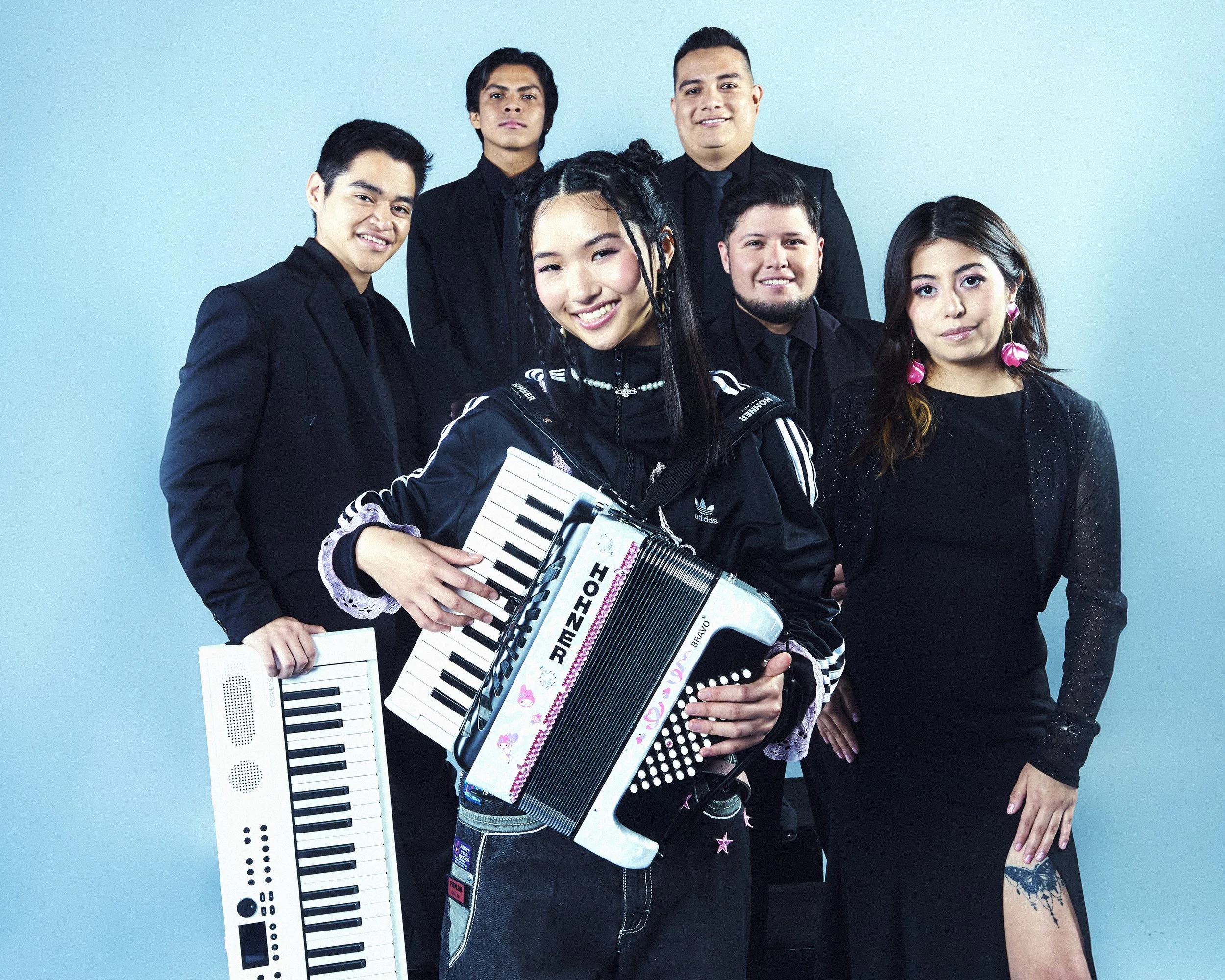
Do you feel like cumbia and the flavor you give are matters of nationality, or do you feel like cumbia is a universal language?
I do not think cumbia belongs to one specific nationality. Its origin is Afro-Colombian, but it has traveled to so many countries. Obviously, in Latin America, it is present in many, many countries, and every cumbia is different. There is also so much fusion. Here in Mexico City, cumbia sounds a certain way. If you go to Monterrey, some people will say that cumbia from Monterrey sounds Colombian because it has a lot of Colombian influence. But there are also people in Mexico who make cumbia villera, which comes from Argentina.
There is so much mixing and so much appreciation for all the different types of cumbia that exist that it is impossible for cumbia to belong to only one nationality. Obviously, maybe it has not reached every part of the world yet. Maybe in Korea, cumbia is not something people listen to a lot. But being here in Mexico and seeing the diversity within one single country makes me think, ‘There is no way I can boil it down to one thing.’ I think it may not be universal yet, but it is very widespread. It is a way to communicate with many different people who may not come from the same culture as me or have the same upbringing as me. That is why I think it cannot belong to one single nationality, because it belongs to all of Latin America.
On September 5, you're performing at Festival Arre, one of the most important stages for the regional and alternative movement. How are you preparing for this milestone, and what can we expect from your show?
We will be doing a lot of shows before El Arre here in Mexico City, and I think that will be good practice for me and my group. It will help us feel looser on stage, more relaxed, and more prepared. I think when you prepare well, you can enjoy the music even more on stage. You can close your eyes and not worry about the notes. These days, I have been planning when we can rehearse and when we can see each other so we can build that chemistry on stage and start practicing now. There are still a couple of months before El Arre, but there is so much to do. There is new repertoire and new songs that I will be releasing on platforms, so we have to learn those songs and make the dynamics work on stage. It takes a lot of preparation.
Is there any group, band, or solo artist you would like to collaborate with?
I have a lot in mind, but there is one group in particular that I have loved since I was young: Súper Lamas. I listened to them a lot when I was in Texas and also here in Mexico. I have seen them a couple of times at events where I play, and then they play after me, or something like that. I really like their music. It is very nostalgic for me; it reminds me of my childhood. I think it would be very emotional for me if I were able to collaborate with them.
You are consolidating your place as one of the most original voices in that tropical movement. Where would you like to take KOREAKUMBIA as your own brand in the future? What do you see for yourself in five years, let's say?
My biggest hope is for my project to be active and to share music all the time. I want to go to different places and play, whether that is within the city, internationally, or around Mexico. The most important thing for me is to share that with my musicians, because the most magical moment of cumbia, for me, is being present, playing in real time with my musicians, and dancing in real time with them. In a way, it is improvised because we have chemistry, we understand each other, and we understand each other’s cues. But there is also a lot of preparation behind it. I have had to be very patient in the process of developing a group because there are many people, many elements, production details, and many things to take into account. In five years, I hope we have a strong rhythm: playing often, sharing with people in small crowds and big crowds, wherever it may be, and making people dance. That is the most important thing for me.
La Coreañera understands cumbia as a space in motion, her project as a phenomenon that grows from fusion, respect, practice, and a real connection with the musicians, the sonideros, and the audience that follows her.