
INTERVIEW: Lucho RK Learns as He Goes on “SORDO DE UN PIE”
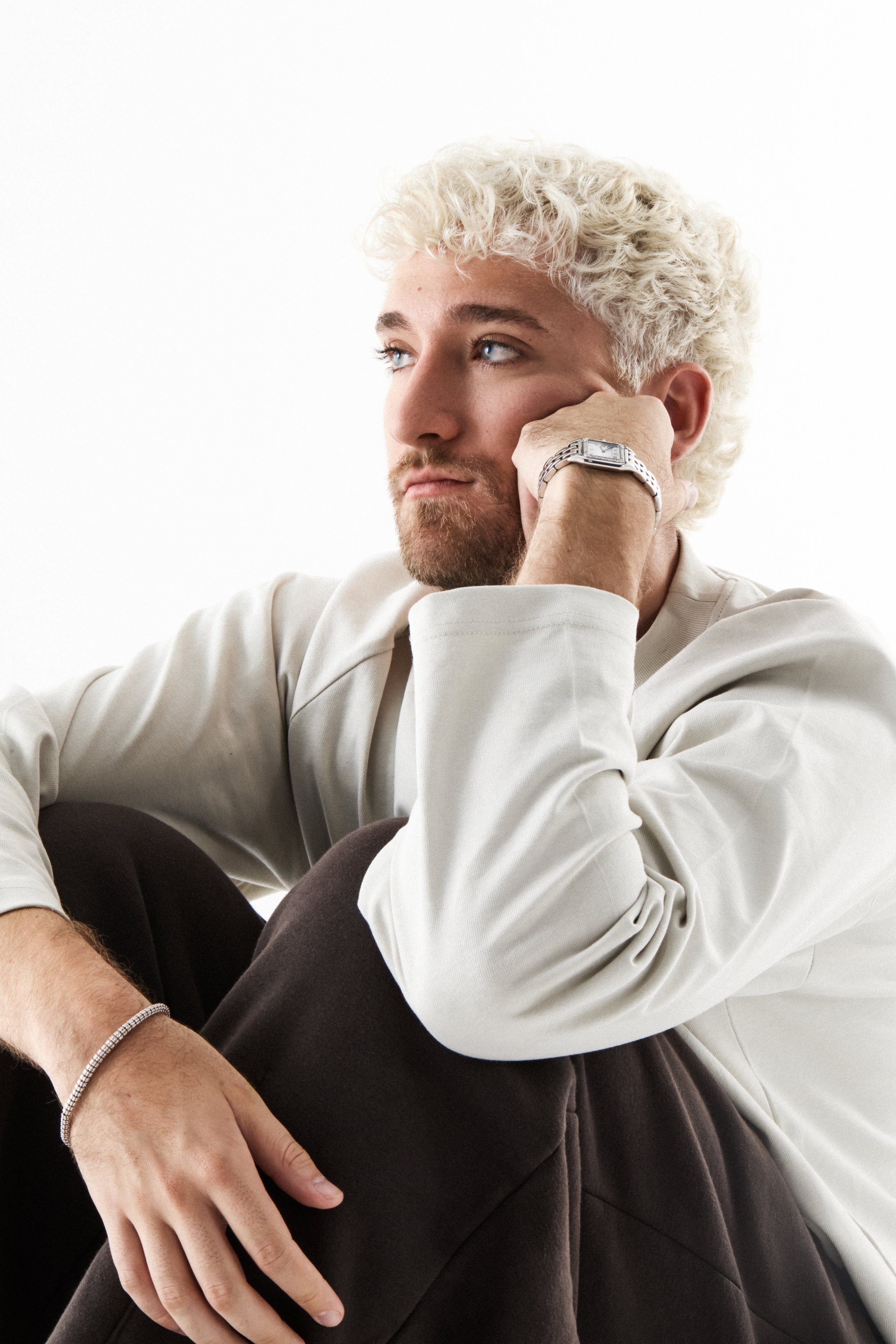
Lucho RK created his first album without a fixed method. He experimented, discarded ideas, and started over as he shaped “SORDO DE UN PIE”. This way of working ultimately became the album’s central theme of learning to move forward without the certainty that everything is being done “right.” For the Gran Canaria artist, clumsiness is as much about discovery as it is about frustration, and it leaves room to laugh at oneself while learning.
That freedom comes through in the contrast between the melodic reggaeton of “AIRE” and the guitars and measured percussion of “LOLA,” where a bolero influence leads him toward a darker story.
The “AIRE” video takes its romantic premise into science fiction. Lucho falls in love with an alien and shares the air he needs to survive with her. Giving her something so essential becomes a way of expressing the trust and vulnerability involved in falling in love.
When we ask how he found his way through these ideas, Lucho compares the process to testing which floor tiles can hold his weight and which might make him slip. That practical, often humorous way of explaining himself carries through his answers. He is comfortable leaving some questions open, even with the album finished.
“SORDO DE UN PIE” is built around the idea of moving forward without knowing for sure whether you are doing things right. What experiences have you had, either while creating the album or in general, that relate to this idea of getting things right and making mistakes?
It’s everything, really. Every decision I made regarding the album, even the choices I made on the days I headed to the studio to finish it, was essentially a process of trial and error: getting it right, getting it wrong, getting it right again, testing things out, messing up, backtracking, starting over, and so on.
There’s no set method or established way of going about it. So, it was really a matter of improvising, figuring out which floor tiles are solid enough to step on, and which ones might cause you to slip, so you learn to avoid those, you know?
The album explores several genres, yet it still feels like a reflection of your own musical identity. How much of that came naturally, and how much did you have to figure out along the way?
Quite a bit. The new rhythms did emerge naturally during the creative process, though it’s true that there were some I hadn’t really explored before. Like in "Vamos Pallá," with Alleh. And, for instance, while I’ve done things similar to "Contigo," I hadn’t done anything quite like that.
It was a bit of a middle ground; somewhere between reacting naturally and something a bit more premeditated, you know?
How did you and Alleh end up working together on “VAMOS PALLÁ,” and what made him the right artist for the track?
We ended up in the studio at 3 a.m. one day. We’d been chatting on WhatsApp and such, and we just really hit it off. I consider him a colleague now. We got into the studio, talked for a while about life, how things were going for both of us, that sort of thing, and then said, "Alright, let’s make something." That track came out of it; we both loved it, and that’s that. We’ve got it ready to go.
“RESACA EMOCIONAL” explores anxiety, overthinking, and the habit of getting lost in your own thoughts. How did you and Daniela Garsal approach those themes together, and did having her on the track change how you wanted to tell that story?
I already had that song written. It was meant to be a solo track, but I knew I wanted to feature a female voice on the album and for me, Daniela is one of the big prospects coming out of the Canary Islands for 2026–2027. A female voice just felt like the perfect fit for that spot.
Working with Daniela was easy; we’re friends from the island. She came by the studio one day—the song was already finished—we put together a verse for her, she recorded it, and then we headed home; we were absolutely exhausted.
The “AIRE” video features some striking character designs, particularly the female lead, whose appearance leaves room for interpretation. What inspired the visual aesthetic, and what is the meaning behind the way these characters look?
Well, there’s this metaphor involving air. I wanted a video with a bit of a fantastical, imaginative feel, and I built it around a core concept: "I’m giving you the most vital part of myself because I trust you. I have faith in our love, so I’m sharing something with you that you’ve never encountered before, the very thing that keeps me alive: air."
Essentially, I fall in love with an alien, travel to her planet, and share this with her to earn her trust. It’s a kind of promise.
It’s a gesture that says, "I’m placing my complete trust in you." In the video, after we’ve met, visited her home, and I’ve been introduced to her father and the rest, I share some of my air with her. She discovers something entirely new and reacts with, "What the hell is this?" And that, in essence, is the story.
“LOLA” explores the idea that even our mistakes can lead us to love, wrapped in a contemporary bolero sound. What drew you to tell this story through bolero, and how was the experience of exploring a genre you hadn’t released music in before?
The vibe of the song—the sonic atmosphere, which is a bit darker—led me to approach the theme of clumsiness from a somewhat more pessimistic perspective, [which is] a side that also exists in the world and in life. You have to acknowledge both the good and the bad in everything, right?
You tend to write based on the sonic vibe of the production; those guitars, those sounds, and the slow percussion reminiscent of a bolero steered me in that direction. I knew I wanted something like that on the record, too.
The melodies and everything else just sort of emerged on their own. For me, as an artist, that’s how things tend to happen. And as I said, there wasn’t a specific creative method, nor was there a set of rules like, "this is how you make a bolero." I’m not even sure if this qualifies as a "proper" bolero, you know? I just stepped into a bolero-style beat, and that was it. There’s nothing more to it.
What music did you listen to at home while growing up in Gran Canaria, and what do you recognize today from those early influences in your songs?
I listened to everything, honestly, I listened to everything. But I feel that I’m heavily influenced by soul, jazz, and R&B. Through my parents, I listened to a lot of Fito y Fitipaldis, Maná, and Melendi; mostly Spanish-language music. But through other relatives, I was immersed in jazz and soul, which I absolutely loved.
I also explored rap and hip-hop quite a bit. I was familiar with G-Unit, 50 Cent, Eminem, Sean Paul, Sean Kingston, Justin Bieber, Justin Timberlake, Jason Derulo... that was my childhood! So, I’ve always had influences coming from all sorts of places. I think that’s something that defines me.
And I’d say that what I lean into most these days are melodies and elements rooted in soul, jazz, and R&B. That’s the most prominent influence I can see in the music I’m putting out now.
When you started making music, did you find it harder to develop your voice, define your style, or figure out which stories you wanted to tell?
Writing, I think, was the thing that seemed the most difficult.
It’s something you gradually get more comfortable with over time, but my strengths always lay elsewhere. Writing fluently wasn’t one of them. That was partly due to overthinking, I suppose, more than anything else. But I think the thing I struggled with the most was learning to just write freely, letting whatever came to mind flow onto the page.
Now that the album is finished and you can look back, what can you tell us about the creative process and what you hope your audience will take away from listening to it?
What I want people to take away after listening to it is the message and the premise of the album: don’t be afraid to do anything; make the most of the fact that you only have one life; and realize that messing up and making mistakes is the best thing that can happen to you, because you’re learning. These are life lessons.
And I want people to embrace their talents and live through them. To have fun with it. Life is more beautiful that way, because, let’s face it, you’re going to mess up regardless. So, you might as well laugh and enjoy it rather than suffer, you know?
Now that “SORDO DE UN PIE” is out in the world, what are you looking forward to next, and are there any goals or projects you’re hoping to pursue in this new chapter of your career?
I don’t know yet. I’m improvising, as always.
Learning to write freely was one of Lucho’s biggest challenges. On “SORDO DE UN PIE”, that freedom means making room for different sounds, following an unexpected idea, and accepting that some attempts will fail.
Listen to SORDO DE UN PIE and follow Lucho RK on Instagram, TikTok, and YouTube for new music, videos, and updates.