
Interview with Josh Knowles: Breaking down the barriers between symphonic and electronic music
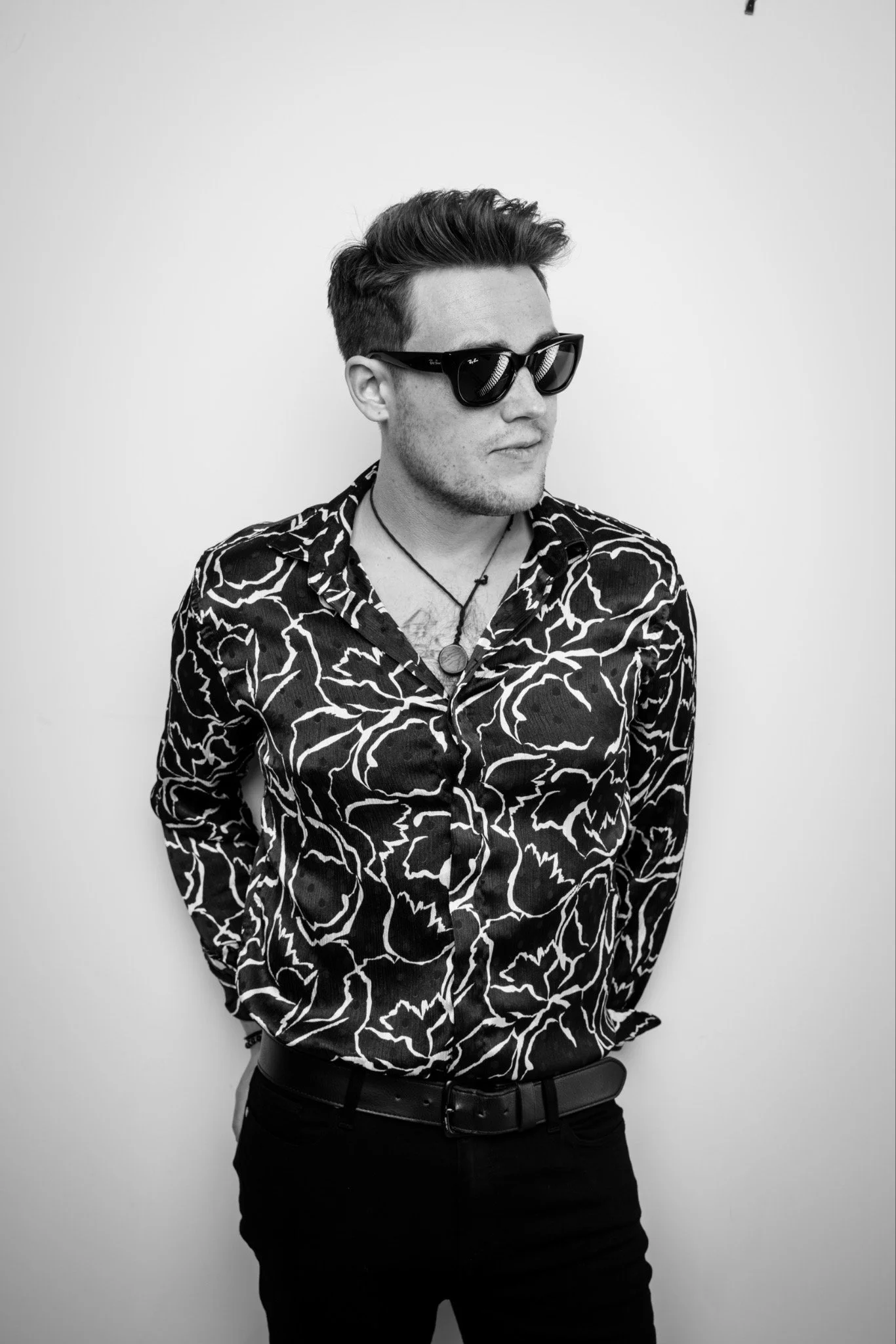
Josh Knowles is a Boston-based musician, composer, and producer dedicated to breaking down genre barriers. His interest in the violin began at an early age after watching a Sesame Street segment that sparked an immediate fascination with the instrument. After leaving Berklee, he supported himself by busking across Boston as he began building his professional career. His work moves fluidly between contrasting musical worlds. The same artist who composes for the Boston Ballet can spend a night in a rock mosh pit with his 98-year-old violin or explore electronic music and sound design in club settings.
Before committing to music full-time, Josh worked as a social worker helping kids in crisis—an experience that defined his view of art as a tool for honest, unfiltered connection. Now, as he prepares to release his new instrumental material and gets ready to take his dance collaborations to international stages in Paris, we sat down to chat with him. He told us about his early days as a street performer, his process of blending symphonic music with electronics, and why he chooses emotional catharsis over technical perfection.
For those who are just discovering your music, what was your first encounter with art, and what led you to decide to pursue it professionally?
For me, the first encounter with art was probably on Sesame Street when I was four years old. There was this animated clip of a kid playing “Twinkle Twinkle Little Star” terribly on the violin, and as the clip went on, you watched him grow up while he kept practicing it. By the end, he was onstage in a tuxedo playing it beautifully for a concert hall. I became kinda obsessed with the idea of playing violin after seeing that (much to my parents’ chagrin).
Around the same time, one of my earliest formative memories was seeing musicians busking in the Boston Public Garden next to the swan boats. I remember being completely overstimulated by it—almost scared of it—but also completely entranced. Even as a little kid, there was something in me saying, “I wanna do that.”
After leaving Berklee, busking in the Commons and on the Boston T was how I paid rent for a few years when I first committed to being a full-time musician. That was really the beginning of pursuing it professionally for me. Part of it was practical—if I could survive making music instead of mowing lawns in Watertown, then I wanted to try to build a life around that. But another part of it was deeper than the practicality.
I’ve always been allergic to giving up on things once I commit to them, especially things that feel meaningful. Music is definitely not a walk in the park as far as career trajectory goes, but that difficulty is also part of what makes it beautiful to me. It constantly forces you to develop emotional discipline, empathy, collaboration, resilience, and the ability to stay creative even when you feel completely lost. It’s a lifelong practice in becoming a better communicator and a more emotionally honest person.
I still feel a very deep pull toward it. I just can’t accept the idea that a meaningful artistic life is impossible or unfeasible, especially for musicians. It feels like the entire creative landscape is shifting right now, and even though it’s unstable and messy, I genuinely believe there’s a new era of artistry on the horizon. I want to be part of that evolution in whatever way I can.
You grew up in a musical environment and were trained, but which personal influences or experiences would you say have most shaped your identity as an artist today?
I grew up in a huge family—three brothers and three sisters—and honestly, that probably shaped me more than anything else. We were constantly making dumb little songs together, harmonizing for no reason, making ridiculous homemade music videos, and replaying Disney movies over and over until we had every song memorized (also much to my parents’ chagrin). Looking back, that was my first real musical education.
I learned theory later. I learned technical discipline later. I learned what creative rigor meant later. But that’s where I first learned what creation and performance actually feel like.
To me, when a performance is really working, the performative part disappears. Everybody locks into the same wavelength together. It stops feeling like a presentation and starts feeling communal. That’s still my North Star creatively—catharsis first, execution in service of catharsis, not the other way around.
Growing up in a loud, chaotic family taught me that from square one. Nothing was pristine, but it was alive. That feeling still guides a lot of what I do.
That same feeling still appears in very different settings. I’ve felt it playing an ambient electronic violin set in the courtyard at the Isabella Stewart Gardner Museum, and I’ve felt it jumping into a mosh pit in Worcester with my 98-year-old violin (her name is Lucy) during a rock show. On the surface, those experiences look wildly different, but emotionally, they come from the exact same place.
That’s maybe the biggest through-line in my music: always chasing that moment where a room full of people suddenly feels connected for a second—where everybody’s steering the ship together.
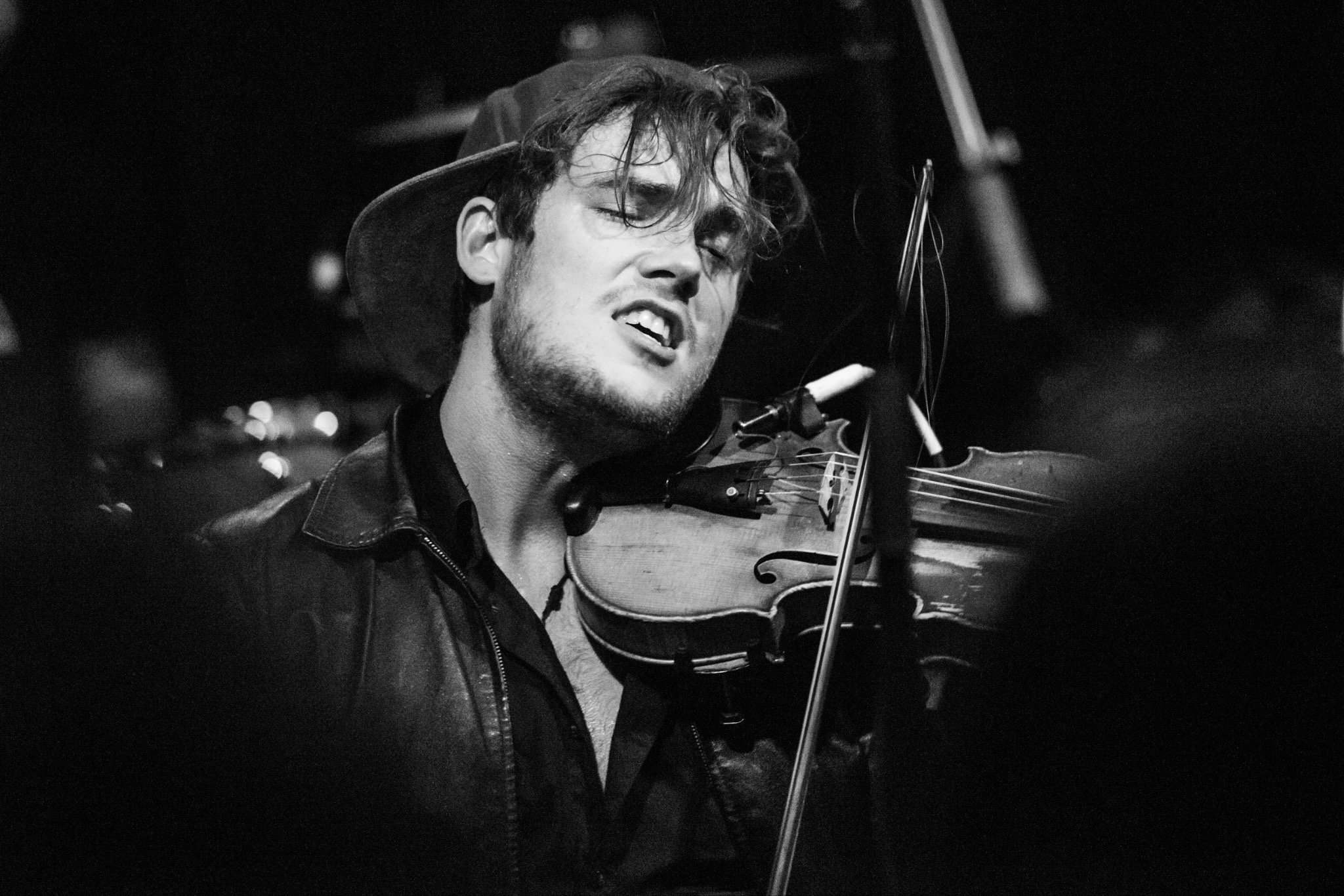
Your music is characterized by a blend of different musical worlds. How do you manage to make such distinct styles feel like part of the same cohesive identity?
I’ve always felt very magnetically pulled toward bridging gaps between different musical traditions. I don’t even fully understand why—I just know the feeling is real.
When I go to a heavy electronic show, I’ll feel this overwhelming instinct of, “I want to be part of that energy.” Then I’ll go see a super out-in-left-field jazz performance and feel the exact same thing. Then I’ll hear a world-class classical soloist and feel completely pulled in by that too. To me, those experiences have never felt contradictory.
One of the clearest examples of that happened recently. My buddy invited me to hear the Boston Symphony perform the Beethoven Violin Concerto with Veronika Eberle as the soloist. Honestly, that piece had never been one of my personal favorites before. But that performance completely changed how I heard it. The phrasing felt so intentional and organic that it reignited something in me creatively and even changed how I approached practicing afterward.
Then two hours later, I went to see Of The Trees at House of Blues, and it blew open another side of my brain entirely. The symphony experience felt emotionally transcendent; the electronic show felt physically transcendent. But to me, they were connected experiences. They were feeding the same creative organism from different directions.
The next day, I sat down and read through the Beethoven concerto, and then after that fell down a sound design rabbit hole, making a fucked-up bass drop. That feels completely natural to me.
I think the challenge—and also the beauty—of trying to integrate different musical worlds is that you never fully “solve” it. You’re constantly experimenting with proportions and balance. How much energy goes toward structure? How much toward raw catharsis? How much toward discipline versus spontaneity? There’s no golden answer, which is part of what keeps it exciting.
We’re living in a moment where almost all types of music are literally at our fingertips, and I still don’t think we’ve fully metabolized what that means culturally or creatively. I want my work to exist as one possible reflection of that reality—not by flattening genres together into some empty novelty, but by letting different traditions genuinely inform each other in an honest way.
How would you describe the sonic contrast between “Night and Day” and this upcoming material?
The contrast is pretty stark, honestly. “Night and Day” is very much a song-first piece. I wrote the chorus and verses while I was walking home from a party at six in the morning (maybe just a tad cross-faded), using my footsteps as the metronome. The core of that track came from melody, lyrics, and momentum first, and then we built production around that to amplify what the song was already communicating emotionally.
The upcoming material comes from almost the opposite direction. A lot of it is instrumental electronic music that leans further into composition, sound design, and more experimental territory. It’s less about supporting a lyric and more about building an immersive world from the inside out.
I’m constantly oscillating between those two poles creatively. One side of me is deeply drawn to songwriting—direct lyrical communication, hooks, narrative. The other side is pulled toward composition and production because there’s also huge emotional power in staying instrumental and letting motifs, texture, rhythm, and atmosphere carry the meaning.
I don’t see a hierarchy between those approaches at all, but I’ve realized I can’t fully live in both places at the exact same time. I have to spend real time inside each one separately before they can meaningfully inform each other.
That process kind of feels like traveling. You can’t spend two days in Paris or Tokyo or New York City and pretend like you truly understand it. You have to get lost in different neighborhoods and spend enough time there for the place to actually affect you. That’s how these different creative modes feel to me, too.
The material coming out soon lives more heavily on the producer/composer side of that spectrum. Then later this year, there’s music coming down the pipeline that feels closer to the middle point between those worlds, which is probably the space I’m most excited to keep exploring.
Despite the genre differences you mention, there is an underlying cohesion in your work. What is that common element that is always present in your songs?
The thing at the core of everything I make, regardless of genre, is probably just basic human emotion and connection. I know that probably sounds simplistic and corny, but I genuinely think that’s the through-line.
Before going to Berklee, I worked as a social worker with kids in crisis, and that experience shaped the way I think about creativity more than you might expect. A lot of the same creative muscles are involved. Whether you’re helping someone through a psychological/emotional freefall or trying to finish a piece of music, the real question is usually the same: are you approaching this with honesty, compassion, and presence? Or are you hiding behind conditioned technique and performance?
I don’t think emotional resonance is something you can manufacture directly. I think you can only create conditions where it has a chance to bubble up. You build the irrigation system for it. You practice being receptive to it. You practice staying emotionally honest enough that something real can actually move through the work.
To me, music has always felt a lot closer to hanging out with a friend than to constructing some grand artistic statement. The genres, textures, and tools can change dramatically, but the underlying intention stays the same: you’re trying to share something truthful and create a moment of connection.
That’s really the common element underneath all of it. Different songs and projects are just different conduits for the same impulse.
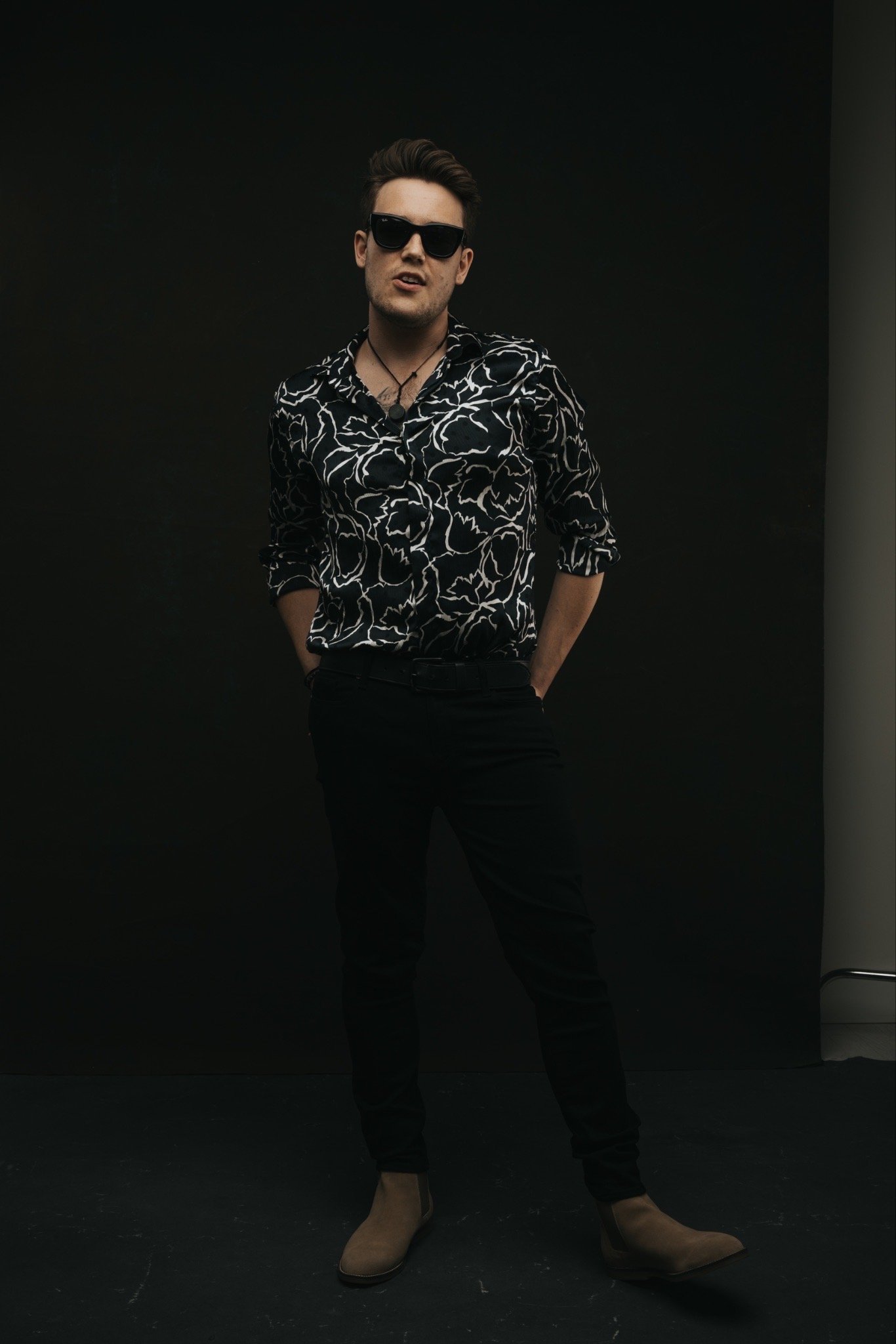
You have an ongoing collaboration with Boston Ballet, with upcoming performances in New England and Paris. How has working in the dance world shaped the way you think about composition and performance?
Working with dance, especially ballet, has shaped me in so many ways. One of the biggest things it’s taught me is how important shared vocabulary is in collaboration.
Ballet dancers are incredible because they balance extreme physical discipline with emotional expression simultaneously. They’re athletes and expressive artists at the same time, and when you work closely with them, you become very aware of how movement and sound can start resonating with each other. You also learn really quickly which things you bring to the table lack an organic synergy.
A lot of the creative process becomes about finding that common vocabulary first. Once that clicks, something really exciting happens—you’re building in real time together. You can physically feel the music affecting movement and the movement affecting the music back. There’s something super alive and exciting about that exchange.
It feels connected to something really archetypal and ancient and human—you’re tapping the same vein as people drumming on woolly mammoth bones and dancing together around a fire, praying for a good hunt the next day. There’s something primal about the relationship between sound and motion that still survives even in highly sophisticated contemporary performance settings.
What’s exciting is that because that foundation is so primal and intuitive, it actually gives you a lot of freedom to push boundaries. When the technical craft is strong enough on both sides—musically and physically—you can go to some really extreme and experimental places while still keeping the audience emotionally grounded inside the experience.
That’s probably the biggest thing dance has taught me: if the underlying connection is real enough, you can stretch the canvas surprisingly far.
How do you prepare yourself mentally and musically to take your work to such significant international stages like those in Paris?
A lot of it comes back to the same feeling I had as a little kid watching musicians busk in the Boston Public Garden for the first time. I remember being completely enamored by it and also deeply intimidated by it at the same time. Even then, I think I was understanding to some extent that performance is a fundamentally vulnerable act.
Preparing for big performances—especially ballet performances with a strong classical component—involves a heavy amount of technical rigor. It really does feel athletic sometimes. You’re training your body, your reflexes, your consistency, and your endurance. But when you do it right, that rigor can become very freeing once you settle deeply into it.
For me, the real challenge is never just technical execution. It’s learning how to keep choosing expression over fear. I still get super nervous before performances, especially high-pressure ones. So preparation becomes this repeated process of confronting vulnerability directly instead of trying to avoid it.
Every rehearsal is basically practicing that decision over and over again: choosing to share something meaningful rather than becoming trapped inside self-consciousness or fear of failure.
That underlying intention is what ties all the technical preparation together. And when things are really working, something beautiful happens where the rigor disappears into the expression. The performance stops feeling mechanical and starts feeling fluid and alive.
With so many projects underway, from new singles to international tours, what do you hope the audience takes away after hearing your musical evolution this year?
I don’t really have some grand, concrete message I want to impress on people or anything. I think at the end of the day, I just hope the energy and emotion transfer as honestly as possible.
I hope the music resonates emotionally in whatever way the listener needs it to. Maybe it feels joyful, maybe cathartic, maybe grounding, maybe bittersweet, maybe communal. Ultimately, all you can really hope for is that something genuine gets shared between people.
That’s always what music has meant to me. Not presenting some perfect finished identity, but stringing together little pockets of connection. A mutual exchange of energy where both the artist and the audience leave feeling a little more connected to themselves and to each other. If people can feel that underlying thread running through all the different projects and sonic directions this year, then I’ll feel like the work is doing its job.
In the end, whether he is composing for the Boston Ballet, experimenting with electronic music in the studio, or preparing to perform in Paris, Josh Knowles’ goal is to choose honest expression over the fear of failure. His musical evolution proves that genres and labels matter very little when the real intention is to connect with people. With several releases lined up for this year, Josh continues to show that music works best when it is genuine, fluid, and shared face-to-face with the audience.