
In Conversation with 8onthebeat on the Record That Reflects Every Version of Who He Has Been
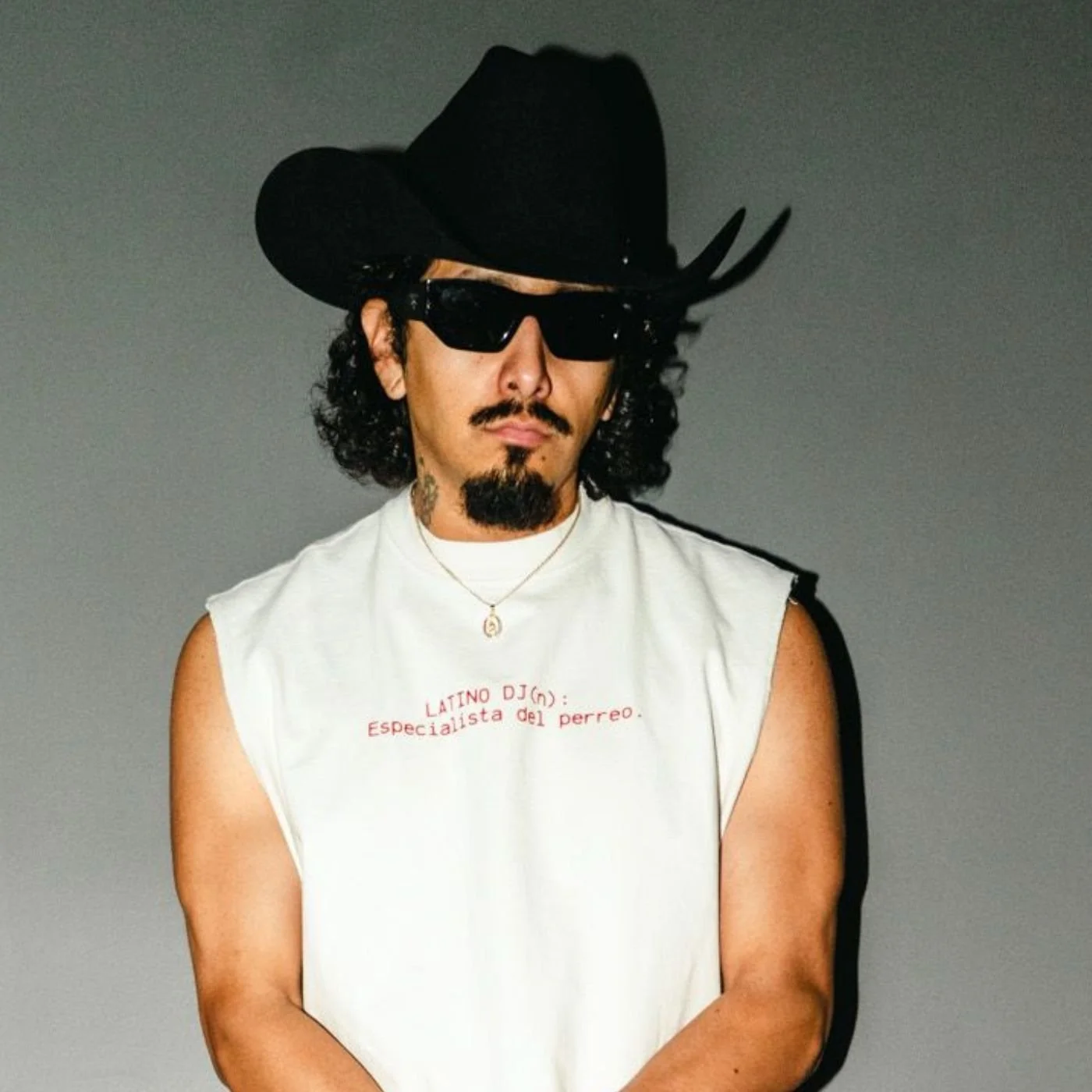
8onthebeat understands music as a meeting point between identity, memory, and celebration. His sound comes from the very specific experience of growing up between the hip-hop of Los Angeles, the Mexican music playing at home, the private parties in San Fernando, everyday Spanglish, and that feeling of not fitting on one side or the other. With “pOCHO,” his first full-length album, the producer and DJ turns that mixture into a statement of pride that reframes Mexican-American identity as a source of creativity, community, and movement.
The project feels like a natural extension of the world he has been building through Privadas con Ocho, his pop-ups, his sets, and his way of bringing Latin culture into spaces where electronic music can also feel close, familiar, and deeply personal. Across the album, corridos, banda, EDM, club culture, rap, cumbia, rock en español, and guest voices from different worlds coexist without losing their essence. We talked to him about how that sound was born, what it means to build community through music, and why, for him, making people dance is also a way of making them feel seen.
Looking at everything you have built and what you do, one gets the impression that your music was not planned in a studio but rather born organically on the streets. How would you define the sound you have been building, which serves as the foundation of your proposal?
I would describe my sound as a mixture of two cultures. Growing up in LA, I got the hip-hop and rap side of things. Then, when I moved to San Fernando, I was able to tap more into my Latin roots.
That is where Privadas con Ocho came from, which is the party I throw now. We used to throw privadas over there. A privada is like a private party that no one posts anywhere. It is more like, if you know, you know. We would have corridos, banda, and grupos come through.
My sound is a mixture of me growing up in those two worlds, clashing them together, and putting them into one piece.
The Mexican-American identity, the Spanglish club culture, and Latin nightlife are other pillars of your work. How do you manage to blend those worlds into a cohesive musical concept?
Honestly, I manage it pretty naturally because I grew up in both worlds. It feels like riding a bike. That is a blessing for us, Pochos, because we get the best of both worlds, and we are able to carry both.
It is not something I have to overthink. It comes organically. Moving forward, it is always going to be that: getting inspired by new Latin music, música mexicana, hip-hop, or rap, then taking from both sides, meshing them together, and continuing to evolve the sound.
We just saw you crush it on stages like EDC Mexico and the Sueños Festival in Chicago. After feeling that energy from thousands of people and DJing the official after-parties, how does it feel to finally capture all that adrenaline in your first studio album?
It feels refreshing and rewarding at the same time, almost like I was right all along. I have had this concept for so long, this idea of blending everything I do into one thing, and this album represents that. It is also just the beginning of what Ocho is capable of doing.
I hope people hear the music, get inspired by it, and get a taste of what goes on in my head. There are many different energies on the album. The first two songs are uptempo, around 140 BPM, then it goes down to 130 and 125 BPM. There is a song with Octavio Cuadras where he is playing guitar; it turns into rock en español, and then I rap in English on the second verse.
It is about being creative and having fun. There is a sound I know is working right now, and I could have taken the easier route and done only that. But I wanted to blend the commercial and the underground and put everything into one. I do not want to limit myself. I want to keep evolving with different sounds and genres. Even within EDM, there are subgenres, so this album represents that freedom.
The album features 13 tracks and an impressive list of guests. What was the selection and collaboration process like with so many different artists to ensure everyone joined your vision without losing their own essence?
It was a fun experience because we had artists like Octavio, Sam, and Saeed, and they are regional Mexican acts. They do not usually make this type of music. They sing corridos, alternative music, and other styles, so being able to take them out of their world and bring them into mine was amazing.
What is beautiful is that when you hear the music, it does not feel out of place. It does not sound like, “Oh, he sings corridos,” or “She does something different.” It sounds exactly how it needed to sound.
I did not have a strict roster or a list of people I needed to go after. It happened organically. Sometimes it was, “This person wants to work with you,” or “I want to work with you.” One thing I have learned in life is that we think we know how things are going to go, but at the end of the day, we do not control everything. God leads you where you need to be, and you just have to do the work.
I was not expecting to become a DJ. I was an artist first, then I became a producer, and now I am a DJ. You learn to go with it. Nothing is a coincidence. It happened naturally, and I am grateful to everyone who became part of it and gave me the opportunity to produce them and guide the vibe. Everybody was down to try it, and that is how we got here.
“teksi,” the album's focus track alongside Deorro, has a very sexy and catchy vocal hook. How did the idea for this track come about, and why did you decide it should be the key commercial bridge for “pOCHO”?
The sexy voice you hear on “teksi” is actually Deorro and me. We used AI to transform our voices. We were FaceTiming each other while working on the song, and we have footage of that. I sent him a voice note with the idea, something like “teksi Techno, teksi,” and he started producing something around it. We kept going back and forth.
At first, we had our own vocals on it, but it was not hitting the way we wanted. We thought maybe we needed a female vocal. At that time, AI vocal-changing tools were still new, and I had a program that could change our voices. I told him, “Try to sound as much like a girl as you can, and I will do the rest.” We both tried it, chopped up different pieces of both of us, and built the vocal that way.
We made it the focus track because we played it at EDC Las Vegas when Deorro headlined and brought me out, and the response was crazy. It is a feel-good record that gets people moving. It also made sense because Deorro is like the godfather of Latin EDM, so having his name attached to mine and having him be part of my album felt right.
When reading about you, it is clear that for you, music, food, nightlife, and community go hand in hand. If you had to choose the ideal setting for someone to listen to “pOCHO” for the first time and fully understand it, what would it be?
The best way to listen to this album is at a Privada, at one of the parties I throw. That is where you can really feel the energy. Especially if you are Latino and understand what the songs are saying, you get to experience it with everyone else.
Most of the album is in Spanish, although I do have a song with Lloyd, who is from London, and that one is in English with a sexy cumbia-type vibe. But for the majority of the album, if you are Latino and you come to one of these parties, you understand the references and the feeling. It becomes a shared experience.
There is also something about hearing the music loud and being fully in it. I do not drink; I have been sober for six years. But for the people who do drink, I have heard that it enhances the experience. I do not know from my own experience, but that is what I have heard. Even sober, the music still hits, and I have met people who do not drink who tell me, “This is the vibe.”
When people finish listening to the last song on your album, what is the main feeling or message you hope stays engraved in their minds?
The last song is “Baby de Nadie,” and that song was not originally going to make the album. I decided to include it because right now we live in a world where girl power is a real thing. Women are killing it and crushing it.
That song is dedicated to the girls. All the songs are for everyone, but “Baby de Nadie” means she is no one’s baby. She is out here trying to have fun, and that is okay. There is still a stigma sometimes that women have to behave a certain way, but it is 2026. Do what you want.
I want guys to hear it and think, “Bro, leave her alone,” and I want girls to hear it and feel like, “This is for me. This is for the girlies.” It has that “Ella Perrea Sola” energy. “Baby de Nadie” is my version of that feeling.
“pOCHO” feels like the starting point of a much larger vision. 8onthebeat is building a world where the dance floor, culture, vulnerability, and community can coexist naturally. His next chapter seems to be moving in that same direction with more music, more collaborations, more spaces to bring his people together, and a more open look at who he is beyond the stage. For him, the goal is not only to sound loud in the club but to create a place where others can recognize themselves, let go, and feel proud of who they are.