
The Many Lives of Gepe’s Songs: An Interview About Reinvention and Discovery
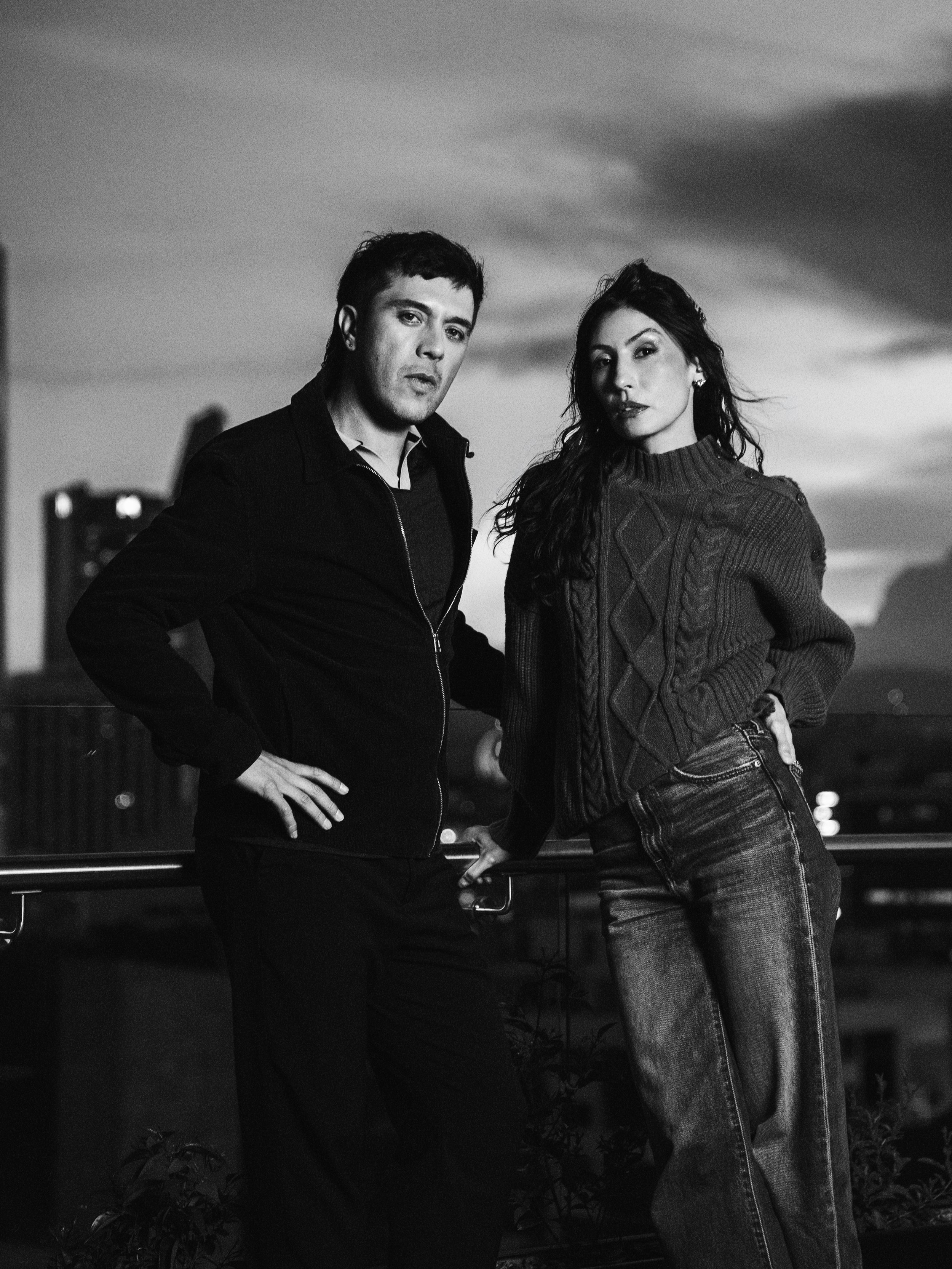
More than two decades into a career defined by constant movement between Latin American folk traditions, pop songwriting, and sonic experimentation, Gepe continues to approach his own catalog with curiosity rather than nostalgia. Across ten studio albums, two EPs, and an international career that has taken him throughout Latin America and Europe, the Chilean artist has built a body of work in which traditional rhythms and contemporary production coexist without losing their emotional immediacy. Recent albums have reinforced that ongoing interest in transformation, but his latest project turns that instinct toward songs from his own past.
The new version of “Invierno,” originally released on “Estilo Libre” in 2015, arrives as “INVIERNO (en la playa),” a collaboration with Argentine singer-songwriter Daniela Spalla and the third installment in a series of reimagined songs that also includes “LOS BARCOS (se van)” alongside Macario Martínez and “SER AMIGOS (olvida)” in collaboration with Daniel, Me Estás Matando.
Gepe is using these releases to test what remains alive within the compositions, which melodies still resonate, which lyrics can speak to a different present, and which songs are capable of revealing new meanings through different arrangements and collaborators. In this conversation with RIVAL, he reflects on the changing landscape behind “Invierno,” the tension between Chilean winter and tropical rhythm, his creative bond with Spalla, and the uncertainty that continues to guide his work.
More than ten years after its original release, how has your relationship with “Invierno” changed, and what did revisiting it teach you, whether about the song or about yourself?
More than a revision, I see these songs as reimaginations. What we’ve done with “Ser Amigos,” “Los Barcos,” and “Invierno” is return to them and ask whether they still have something to say—whether their melodies, lyrics, and emotions can still resonate today. I like to think of this process as opening an old trunk, taking these songs out, looking at them again, and discovering what is still alive within them.
In the case of “Invierno,” it was also interesting to revisit a lyric that speaks about a landscape and a reality that have changed over time. In a way, the song has become the image of a winter that no longer exists quite as it once did. Re-recording it became a way of testing the song’s timelessness and seeing whether it could still speak to the present all these years later.
What does the beach represent within this reinterpretation, and how does it transform the emotional world that was originally associated with winter?
The beach represents a contradiction that I found interesting to explore. In Chile, going to the beach in winter has very little to do with the warm, sun-soaked image that might exist in other parts of Latin America. It’s cold, you have to bundle up, and the ocean is freezing. At the same time, the arrangement of this version is inspired by tropical and Caribbean rhythms such as bolero, cha-cha-chá, and bachata.
I was drawn to the idea of bringing those two worlds into conversation: lyrics that speak about winter in Santiago, Chile, paired with music that conveys warmth, celebration, and movement. That contrast became such an important part of the song that it ultimately inspired the title, “INVIERNO (en la playa)”.
When you reinterpret a song that already carries so much history, how do you decide which elements should remain intact and which are ready to evolve?
I think there are songs that simply stay with you over the years. I wouldn’t necessarily call them eternal, but they’re songs that maintain a sense of continuity and keep walking alongside you. “Invierno” is one of those songs for me. It has been present throughout different stages of my life and career, and revisiting it was a way of confirming that it still has something to say.
Rather than deciding what should remain untouched and what should change, I was more interested in testing its ability to transcend time. I wanted to see whether its lyrics, melody, and emotional core still resonated today. To me, “Invierno” is one of those songs that feels very close, almost like a family portrait: something you don’t necessarily look at every day but will always be a part of you.
This new version features Daniela Spalla. What made her the ideal collaborator for this song?
Daniela and I have known each other for many years, but our connection grew especially strong after we worked together on a project in Mexico City in 2020. Since then, we’ve crossed paths constantly, both on and off stage. We’ve shared concerts, birthdays, parties, and many moments that go beyond music, so this collaboration also comes from a very genuine friendship.
I’ve always admired her talent and the professionalism she brings to everything she does. What I especially appreciated about this project is that she wasn’t just a featured vocalist—she became deeply involved in the creative process. She made important suggestions that helped shape the arrangement and ultimately influenced the final sound of “INVIERNO (en la playa).” I loved seeing that level of commitment to the song, and I think it’s one of the reasons the collaboration felt so natural.
“INVIERNO (en la playa)” is part of a broader project that revisits significant moments from your catalog. What inspired you to embark on this journey through your own work at this point in your career?
The inspiration came from realizing that many of these songs had been accompanying me onstage for years and still had room to transform. “Ser Amigos,” for example, was the song that opened the door to this entire process of reimagining because it showed us how a completely different arrangement could reveal the lyrics and melody from a new perspective.
Rather than revisiting these songs out of nostalgia, I was interested in exploring new ways of highlighting the stories, images, and emotions they contain. In all three cases, the musical arrangement is in service of the lyrics and what the song is trying to communicate. Ultimately, this project is driven by a question that I find fascinating: which songs are able to transcend time and continue finding new ways to speak to the people who listen to them?
What makes a song feel ready to be revisited? Is it something you discover over time, or do you know from the beginning which compositions still have more to say?
I don’t think there’s ever an exact moment when a song feels completely ready, and it’s something about that uncertainty that I enjoy, even if it can also be a little unsettling at times.
Through these reimaginations, I’ve discovered that some songs continue to reveal new possibilities as the years go by, while others simply don’t withstand the test of time. We worked on far more songs than the ones that ultimately became part of this project, and several were left behind because we felt they no longer had anything new to say.
I also don’t believe there’s such a thing as a definitive version. I’m always left with the feeling that a song could go a little further or find a more honest way to express itself. What I’m searching for isn’t perfection, but rather a way to get as close as possible to the essence of a song and to whatever has kept it alive all these years.
After revisiting your artistic past through these recent releases, where do you feel your creative curiosity is leading you now?
Honestly, I don’t know—and that’s exactly what excites me the most. I feel like my creative curiosity is wandering, but not lost. I haven’t lost touch with that impulse to create; I just don’t know exactly where it’s taking me, and I find that much more interesting.
What I enjoy most right now is keeping the door open to experimentation. After more than twenty years of making music, I’m still excited by the possibility that a song can completely transform itself, change direction, or become something I never imagined when I first started working on it. Having the freedom to experiment, make mistakes, and occasionally discover new paths is still one of the things that keeps my creative process alive.
I think that sense of vertigo—not knowing exactly what comes next, but still wanting to find out—is what inspires me most today.
Gepe’s reflections reveal an artist less interested in preserving definitive versions than in allowing songs to remain open, unstable, and responsive to time. “INVIERNO (en la playa)” expands the original’s emotional possibilities and confirms that revisiting the past can also be a way of moving forward. For Gepe, that movement remains driven by experimentation, doubt, and the willingness to follow a creative path before knowing where it will lead.