INTERVIEW: Whiskey Flower Find Their Truest Sound on “Double Yellow Lines”
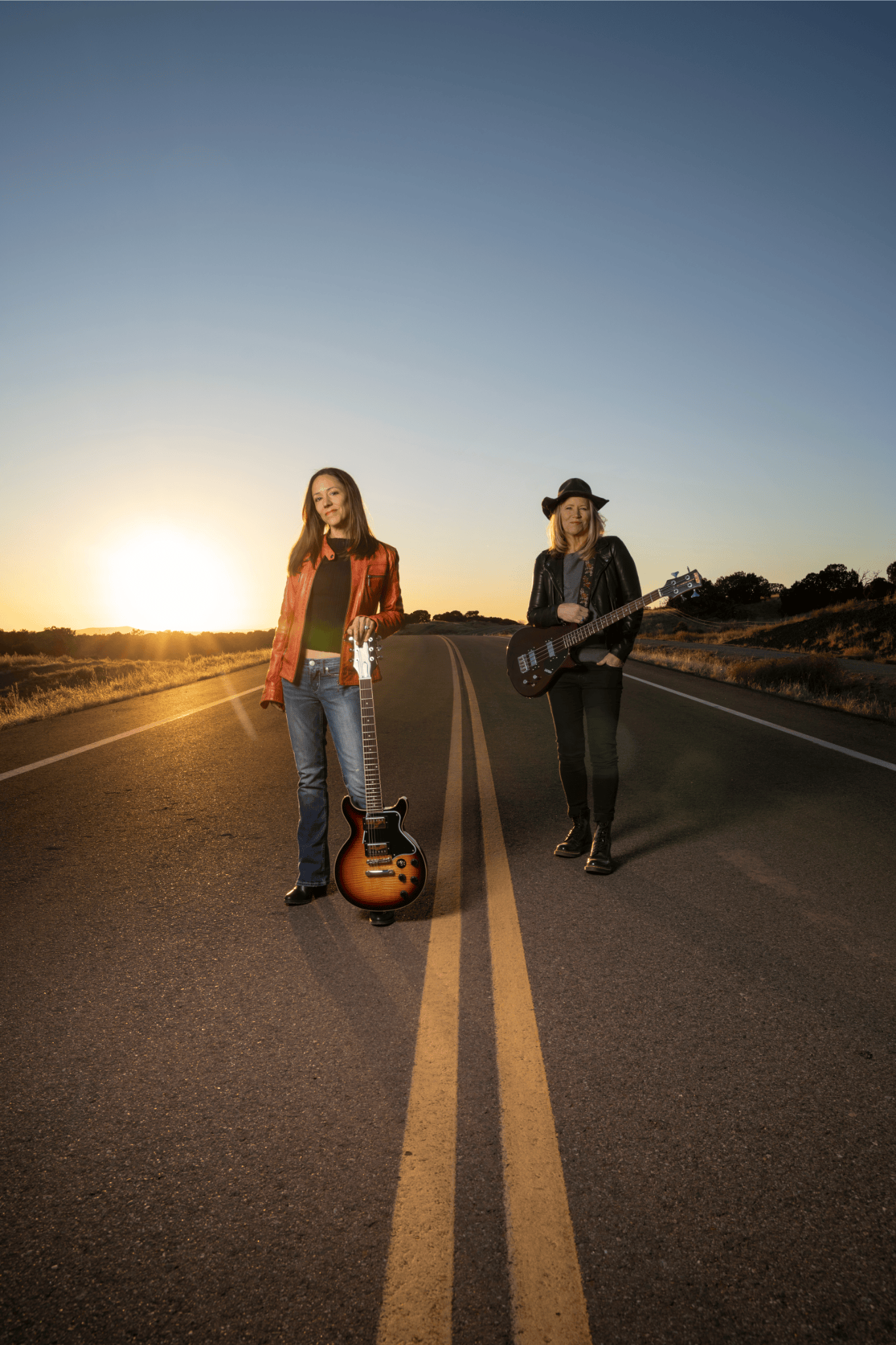
Whiskey Flower is in that defining moment, the one where a project finally takes its true shape. The duo, made up of Holly Lucille and Julie Neumark, arrives with “Double Yellow Lines,” an EP that leans more into rock and feels more visceral and honest, a completely unfiltered reflection of who they really are.
Produced by John Would, the project embraces imperfection as a language, preserving the raw energy of songs that, as they explain, weren’t overthought but instead came from a deeply authentic place.
In this new chapter, the artists move fluidly between the intimate and the expansive. From the contained yet liberating rage of “Stop Stereo” to the introspection of “Double Yellow Lines,” a song shaped by years of therapy, self-awareness, and the urgency to pause and truly examine one’s own life, the EP builds an emotional map that explores identity, boundaries, memory, and transformation.
We had the opportunity to sit down with the band and talk about this new release, their creative process, and the sonic evolution that led them to embrace a more assertive take on rock Americana. We also touched on the impact of bringing their music to the screen, the power of songs as a space for connection, and what lies ahead for Whiskey Flower in this new phase.
“Double Yellow Lines” marks a new chapter for Whiskey Flower. Could you tell us about the songwriting process behind the songs on this EP?
JULIE: This EP was a turning point for us because it really helped define what Whiskey Flower sounds like. For me, songwriting is less of a strict process and more of a flow. I write songs outside of Whiskey Flower, too, and over time I’ve gotten better at recognizing which songs belong to this band and which ones don’t. The songs on this EP made that clear. They all had this raw, unapologetic energy that felt undeniably like how we have evolved as a duo, so in a lot of ways, they chose themselves.
HOLLY: What makes this EP feel especially true to who we are is that none of the songs were overthought. They came from a very honest place, and we let them stay a little rough around the edges in the best way. That was important to us. We weren’t trying to polish away the spirit of the songs. We wanted them to feel alive.
The project was produced by John Would and recorded while capturing live performances. How did that approach influence the energy and sound of the EP?
H: Recording live was the ultimate example of 1+1+1+1 equaling 1000. It was the synergy of four people (John Would on lead guitar and Kristen Gleeson-Prata on drums) coming together, each bringing something distinct, to create a sound that feels raw, real, and honest.
J: Agreed. It was actually John’s idea to record “Stop Stereo” live. The process and the result felt so satisfying that we decided to make the whole EP that way. Recording live gave the songs an energy we didn’t want to lose. There’s a tension and realness to it that just felt right for these tracks.

Your music has been described as “Americana rock where grit meets grace.” How would you define Whiskey Flower’s sonic identity today?
J: I might just flip that to “Rock Americana,” because we definitely leaned harder into the rock on this EP. But I still think “grit meets grace” fits. There’s a rawness to what we do, but also a vulnerability and heart that’s just as much a part of the sound.
H: Yeah, I agree. Righteous Indignation was produced in a pretty stripped-down, singer-songwriter way. This one has more drive, more bite. The heart is still there, but we let the rock side of Whiskey Flower come all the way forward.
The single “Stop Stereo” is presented as a queer freedom anthem. What story or personal experience inspired this song, and what message do you hope resonates with listeners?
J: “Stop Stereo” came out of that specific kind of burnout where you’re doing “fine” on paper, but inside you’re overstimulated, over-accommodating, and quietly unraveling. It’s a boundary song. It’s the “I’m not here to make you feel comfortable anymore…and I’m finally ok with it.”
H: Once Julie had the lyrics and melody, I wrote the bassline to underline that tension. I wanted to support the punch of the message but also give it movement and swagger. It’s one of those songs where the bass gets to feel like a second voice.
The EP’s title track, “Double Yellow Lines,” explores the idea of stopping to take a moment and evaluate our own lives. Was there a personal moment that sparked that reflection?
J: Actually, it was more than a few moments that sparked this song. But they all ladder up to family of origin, along with the 25 years of psychotherapy that helped me build the muscle for that kind of self-reflection.
At its core, the song is about emancipation. For me, that freedom came later in life. So when I finally started making real changes, it brought the kind of panic you feel when you wake up to a blaring alarm and realize you’ve overslept. Like you’re suddenly racing to the finish line. The song became a reminder to slow down in the middle of all that change so I don’t hurt myself or anyone else in the process.
“Truth & Consequence” offers a perspective on cultural division in the United States. Do you believe music can still be a space for dialogue and reconciliation?
H: Yes, absolutely. I think music is one of the few spaces left where dialogue and reconciliation can still happen. It’s universal. It reaches people beneath their defenses, and sometimes it can bridge a divide in a way that nothing else can.
J: I really hope so. I recently posted a teaser of the song on social media and was encouraged to see thoughtful, positive responses from people across the political spectrum. That may sound small, but it mattered to me. I still believe music can create space for people to feel something before they rush to defend a position, and maybe that’s where dialogue can begin.
“Abilene” seems to be one of the most intimate songs on the EP. What was it like revisiting that chapter of Julie’s life and turning it into such a vulnerable musical piece?
J: Ya, “Abilene” is a really personal one for me. Revisiting that chapter of my life felt vulnerable but also healing. The song reaches back to my years as a solo artist and to a time that held a lot of hope, self-doubt, and longing.
Back in 2010, I had planned a Texas tour that never happened, including a stop in Abilene. Over time, Abilene became symbolic. It came to represent the dream itself, along with all the uncertainty and pressure that can come with chasing it. I wrote the original for “Julie Neumark, solo artist” very quickly, in about 15 minutes. Then (weirdly) almost exactly 11 years later, I woke up with a new melody for it. That became the Whiskey Flower version.
H: When we started playing this version together, it gave the song even more depth. Julie had already brought so much honesty to it, and my role was really to meet it there and help hold that vulnerability musically. That’s one of the beautiful things about being a duo. A song can take on new emotional weight when two people step inside it together.
Holly, you’ve been recognized by Time Magazine on its Alt 100 list, and Julie has built a strong career as a songwriter and vocalist. How did your paths cross, and what made Whiskey Flower become such a natural creative partnership?
J: Our life partnership came first, actually. We’ve been a couple for almost 20 years.
H: True, but it was actually music that brought us together.
J: Yes, when I first walked into your apartment and saw your display of guitars…
H: My props…
J: Haha! It was love at first strum. At the time, I was focused on my solo artist career, and guitar was a hobby for Holly. But when my band broke up, Holly would sit in sometimes, and then she learned to play bass because we needed a bass player.
H: I thought, “2 less strings? What could go wrong?” I quickly learned I should have always played bass.
J: During the pandemic, when we had nothing but time, we started messing around, and Whiskey Flower was born.
Your songs have even made their way onto television. How did that experience change the project’s visibility and your connection with new audiences?
J: Having our songs placed in Middlehood (Prime Video) definitely gave Whiskey Flower more visibility and helped us reach a broader audience. It put the music in front of people who may never have found the band otherwise, which was really meaningful. What made it even more special was that the themes of the show—reinvention, family, longing, and starting over—lined up so naturally with the emotional world of our songs.
H: It really expanded the band’s reach. When people discover your music through a series, they connect with it through story and emotion first, and that can be incredibly powerful. It brought Whiskey Flower to a wider audience in a way that felt authentic to who we are.
With the release of “Double Yellow Lines” in March, what comes next for Whiskey Flower?
H: More music, more shows, and hopefully more road time. We’d love to support a larger act and just keep building from here.
J: Ya, a big part of what comes next is continuing to build the community around the music. Double Yellow Lines feels like an important step for us creatively, and I’m excited to keep growing the audience, playing more live, and seeing where this chapter can take Whiskey Flower.
Connect with Whiskey Flower on Instagram