
Mary Chicken Soup & Rice on “GROWING,” Theater, and the Beauty of the Beat
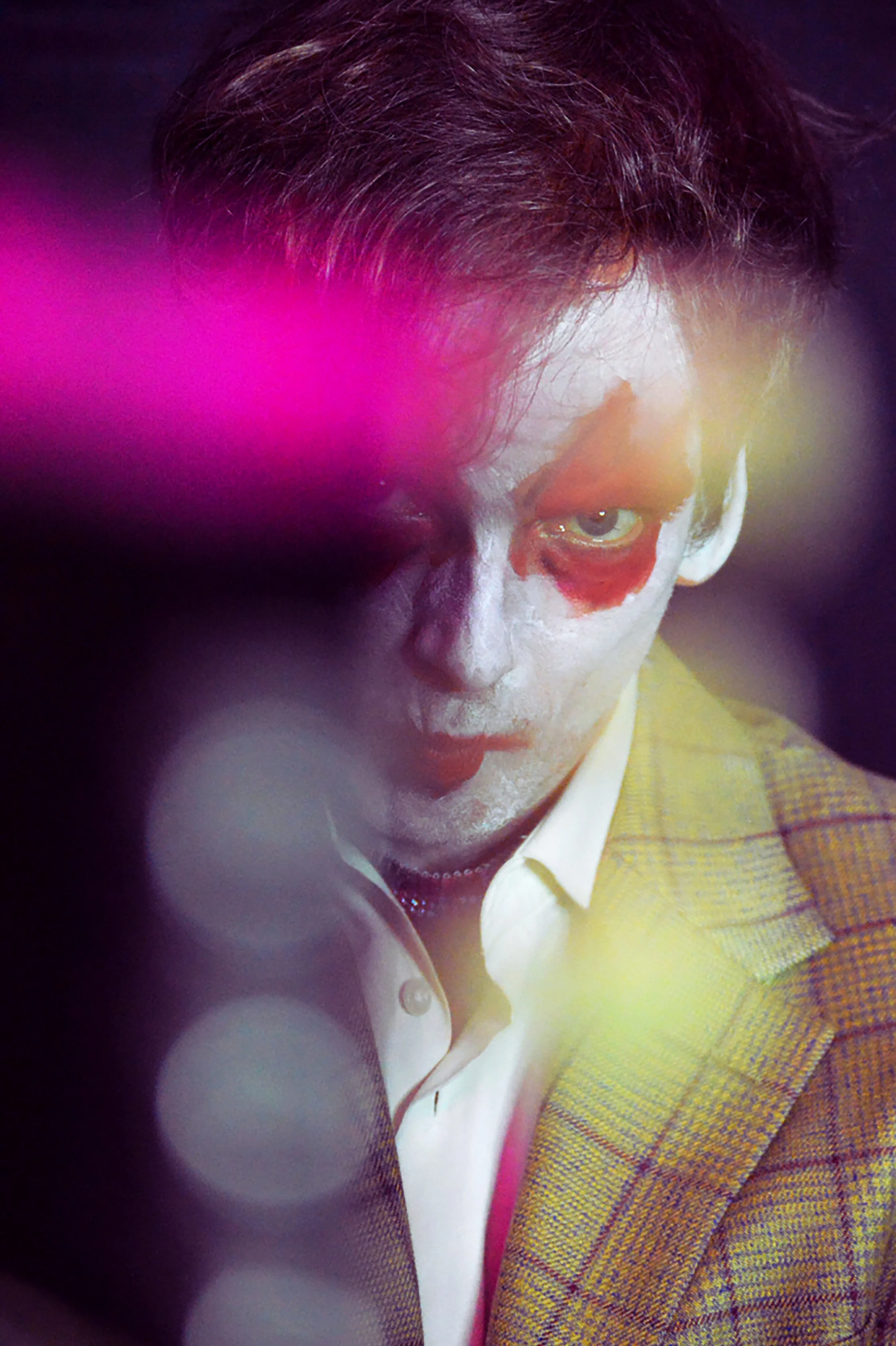
Under the moniker Mary Chicken Soup & Rice (MCSR), Matthew Dunehoo has created a musical world where theatricality and sincerity coexist, and the surreal feels real. MCSR describes the work as “eye-contact music from a misshapen eccentric” and blends electric guitar, electronic percussion, and layered vocal harmonies to craft soundscapes that are hypnotic, playful, and deeply human. The latest video, “GROWING,” captures this unique vision with dreamlike visuals that encourage the audience to feel the music as much as experience it.
In this interview, MCSR shares the story behind the stage persona, the influences of artists such as Siouxsie, Bowie, and Love and Rockets, and how a spirit of childlike play shapes creative decisions. From Kansas to Los Angeles, the journey reveals an artist who balances chaos and precision to express work honestly while inviting listeners into the world of MCSR.
“GROWING” is very surreal and out there. What was the initial spark that shaped the video’s dreamlike atmosphere?
Firstly, let me say thank you for taking the time to consider my work and facilitating this interview. When I first envisioned a video for GROWING, I saw Missy Elliott's video for THE RAIN and thought about pulling off something in that style. I hope people hear GROWING as a dancey banger in that zombie march way. I wanted most of the action in the video to be about feeling the beat. The spine of that tune is my favorite beat, which I overuse happily, that "boom, cha, boom boom, cha, boom boom, cha, boom boom beat." It always makes me happy.
You’ve called MCSR “eye-contact music from a misshapen eccentric.” How do you balance the theatrical persona with the sincerity at the core of your work?
I can't think of anything more sincere than to acknowledge the preposterous theatricality of life, the incessant melodrama in our self-criticism, our unhinged desires and insecurities, and our thoughtless treatment of others and the planet and ourselves. I share a birthday with the Bard, grew up in theater, and certainly see the world as a stage and our lives as performances. I think eye contact in live performance is extremely important. I want that commitment from performers that I go to see; I want to know they acknowledge the part I'm playing in their performance, and I want to do the same for others. The "theatrical persona" is my sincere depiction of what's really going on inside all people at all times, just unfiltered for the musical ceremony. Taking off the mask by putting on the mask. I'm not trying to sound pretentious about this work now, but I've been in bands all my life, and this is the most honest thing I've ever done, and it's been extremely considered and thought through in my single, hermit, misshapen adult life.
The trickster spirit behind the project emerges through face paint, dirty suits, and purgatorial theatrics. How did this character first take shape for you?
It really came from years of misunderstanding why I'd never tried to cross the two, my theater background, and my music performance. I was probably just doing the thing that was expected, trying to adhere to whatever the expected trope had established for emo or rock or whatever. Fashion and music have always made me uncomfortable, as I don't feel like I have an innate fashion sense that represents my musical values. I've never been much for dressing up for Halloween, but my first Halloween in Los Angeles, I put on a little ghoul makeup, went to a party full of strangers, and had a blast leaning into my scary face. Then it was clear that I had to bring that into MCSR.
Your live sound blends electric guitar, squawking vocals, drum-and-bass foundations, and an “alien choir.” What does your process look like when building something so intentionally unorthodox?
I don't see it as intentionally unorthodox. I'm doing everything I can to pull off a performance that can count as a performance that someone would want to spend time and money seeing. I can't afford to pay a band, and I'm at a point where I don't want a collaborative project; I just want my songs to exist as I imagine them, and I can't expect other musicians to commit to my anonymous endeavor in an age in America where no one can afford anything...fast. So I have to play to backing tracks. And more mechanical beats make more sense for solo performance than an emulation of a real drummer with feel and variance. And I cannot claim to be an exceptional singer; I have always called myself a squawker, and that claim makes sense now more than ever as a chicken man, so I gotta roll with it. "Alien choir" is tons of indulgently layered vocal harmonies, which I love doing, and is probably a vestige of my Catholic choir upbringing. And I'm an alien.
You reference artists as varied as Eno, Siouxsie, Bowie, Love and Rockets, and Carole King. What qualities from those influences surface most clearly in “GROWING”?
Of all those influences, I see GROWING as most Love and Rockets/Siouxsie. They rode the minimalism bit to great effect and also created danceable songs that were still spooky and magical.
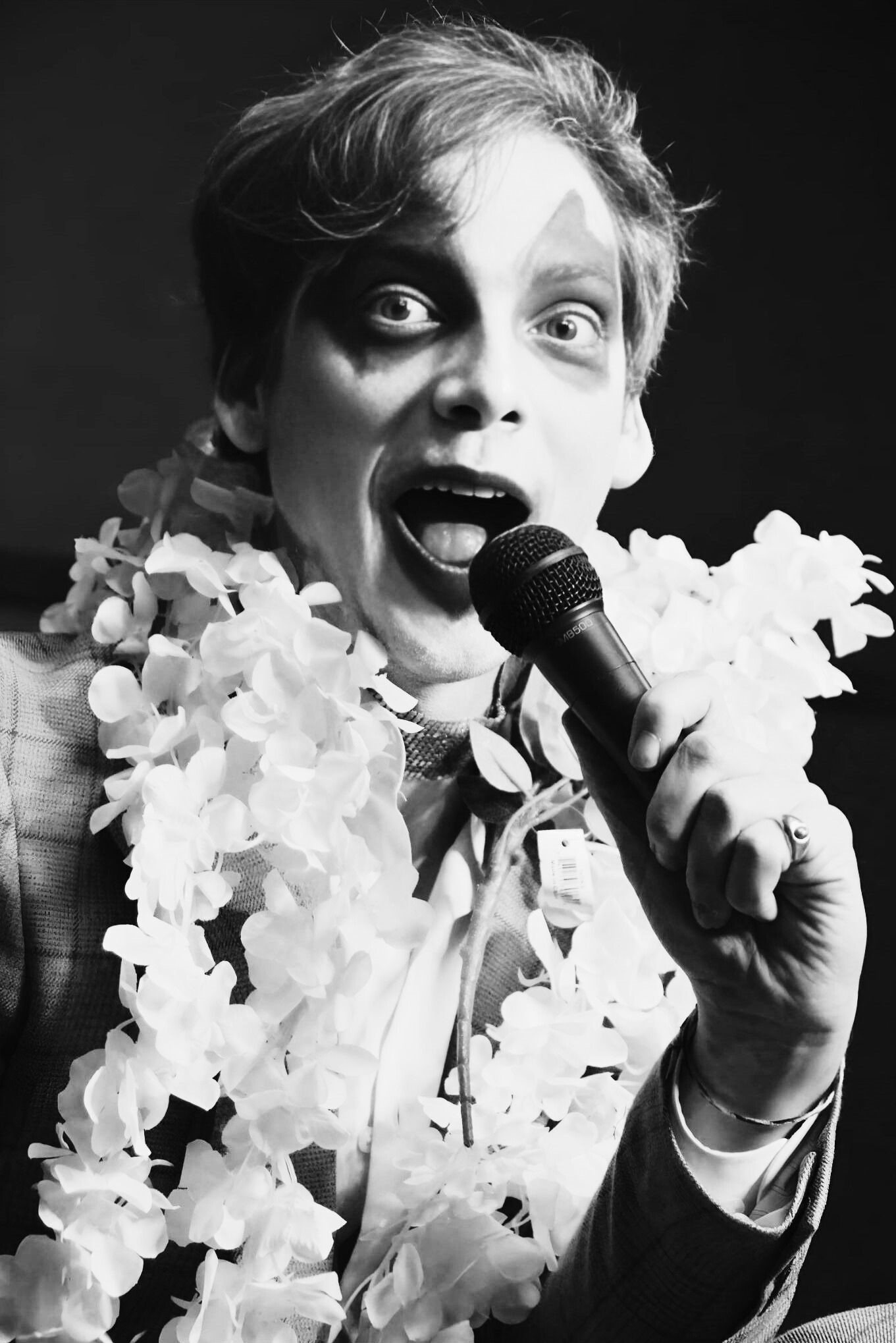
The moniker MCSR was inspired by “Really Rosie” and the spirit of irreverent play. How does that childlike defiance inform the darker, more chaotic elements of your work?
If we're fortunate enough to have long lives, we spend most of them reeling from everything piled on us before we can defend ourselves and worshipping that youth in retrospect, without feeling how gnarly it is, all that bubbling skin and bone shifting and trespass and adults putting off their insecurities and fixations on sponge humans, all this transference of energy that isn't invited. To me, life is just always impossibly beautiful and painful at once. I try to treat young people with the same respect and intelligence that I would treat an "adult." And as I alluded to earlier, everything is play, everything is a performance. The most honest we ever get is at shows, where someone is PLAYING, and the audience is there because they GET IT and it works, and no one needs to feel anything but present and part of it.
How does the outsider identity manifest in your creative choices today?
I think about it all the time and won't let myself go too far so as to make anyone reading this puke and hate me. There's some core thing in me that just feels deeply alone and detached from this world, incompatible. I see this sometimes in other people, and sometimes I see that in them as the catalyst for being very kind or giving, or in work they produce that I find captivating and exhilarating because they're confronting that feeling and making sense of it through art that I can feel connected to as well, even in my apartness. I spend the majority of my life alone. NOT saying this for pity; it's just a fact. I've never had long-term partners and am often working in my room alone, driving alone, or walking alone. I just pray that all of those patterns don't cause me to make work that is unrelatable or only about me. I get scared of saying the word "I" in songs, but the truth is, if something is about me on Earth, then it's probably about someone else, too.
Your work embraces both sincerity and chaos. Do you see “GROWING” as an evolution of that duality or maybe a turn into something new?
GROWING doesn't feel very chaotic to me. It feels locked in and secure in the beat and the lyrical structure. I do want to make more dance-centric songs. Remixers and collaborators, please reach out: marychickensoupandrice@gmail.com
You mention that an encounter with a chicken can be a powerful omen. How does symbolism, absurd, mystical, or otherwise, guide the stories you choose to tell?
I can't tell you what a gift I consider it to be to have selected a moniker that has lent itself to production so easily. I have always loved puns, and the chicken puns have always been the most readily generous; they're endless (purposefully avoiding usage here for journalistic integrity). I live right down the street from the Philosophical Research Society here in Los Angeles, one of the greatest gifts of having moved to LA. Founder and mystic Manly Hall wrote The Secret Teachings of All Ages, and the PRS has been a beautiful beacon of possibility and wonder for me in a town that still feels new after four years, and I think always will. But the consideration of the mystical in life has always given me hope and cause to keep going. From the feeling of being absolutely consumed by the Holy Spirit after my first communion to the feeling of total protonic reversal after spinning "St. Elmo's Fire" for the very first time to walking through the Denver airport and listening to a podcast, looking down at my feet, and then looking up at a sign for "Sasquatch Coffee" at the exact moment the podcaster, speaking on an entirely unrelated topic, says the word "sasquatch." Something more special than routine and blessings, and death must be occurring out here. Losing live performance during the pandemic just absolutely drilled it home for me that music is my faith and I am a lifelong practitioner. And in that, I want to be a devout practitioner, which to me means writing songs regularly. Touring. Releasing records, whatever that means now and will evolve into. TRYING to contribute in a meaningful way. And being open to the embarrassment, the self-doubt, the frustration, and the insecurity that come along with putting it all out there. So again, thanks for making time to feature my work, and for anyone who reads this, because it does take all of these interconnected steps to complete the spell.
Follow MCSR on Instagram for more info!