
INTERVIEW: James Laurent Breaks Down the Making of “Dangerous Love” and “Degen Z”
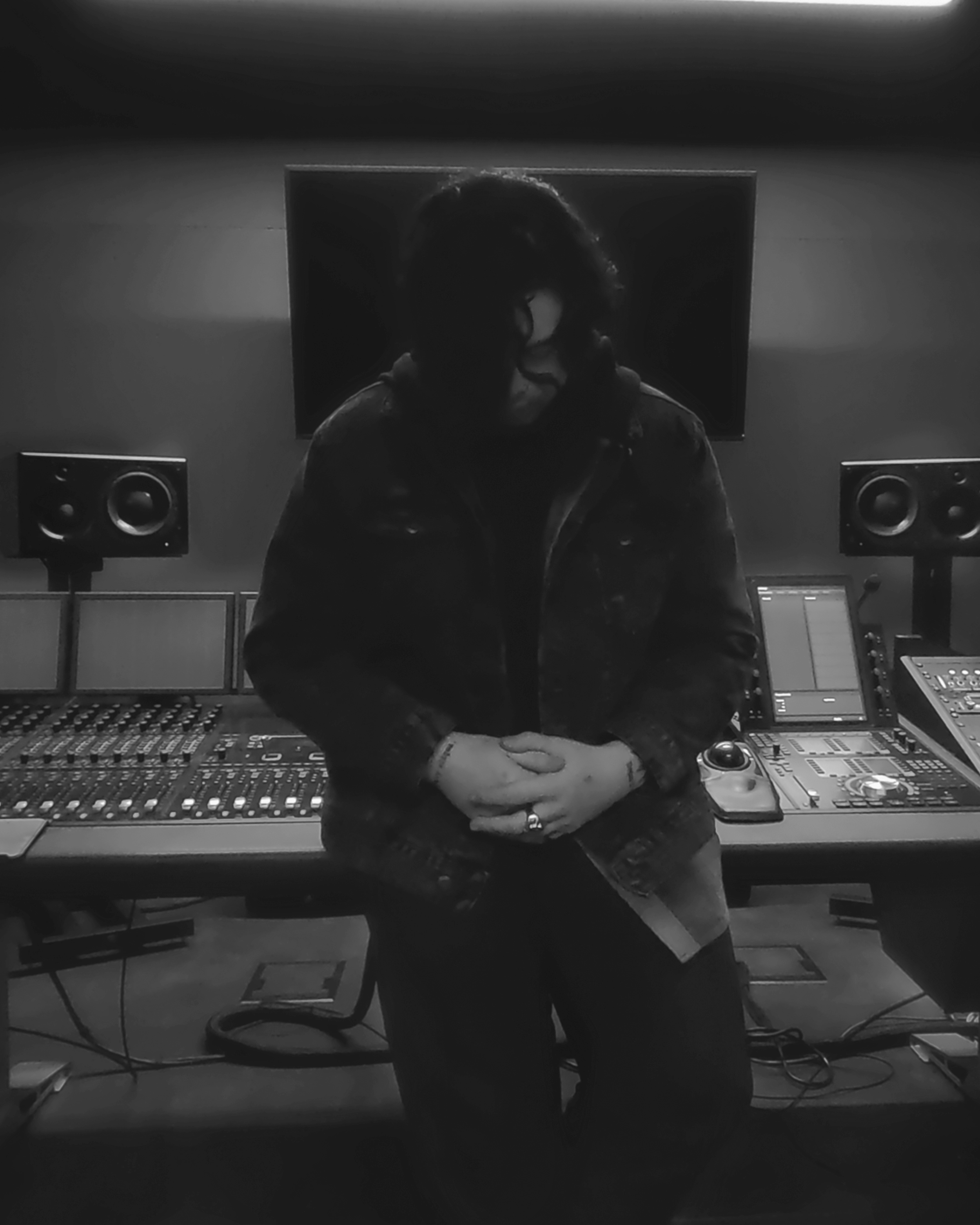
James Laurent works at his strongest when the night is quiet. “Midnight Speeding” emerged during an early-morning session shaped by darkness, a single glow from the studio gear, and a creative momentum that carried him from the first idea to a finished foundation. What began as a spontaneous surge turned into the seed of a broader artistic concept. He later spent more than two hundred hours developing the visual identity of the single, immersing himself in 3D modeling to ensure that the imagery aligned with the spirit of the track. His path reaches from his Milwaukee roots to studios in Los Angeles, through engineering work with Nelly and South Park, and the design of Dolby Atmos rooms for Amazon Music, a journey defined by precision, curiosity, and steady ambition.
And now, with “Dangerous Love” and the larger vision of “Degen Z,” Laurent is stepping fully into his own lane. We sat down with him to talk about the journey, the risks, and the freedom of letting go. Check out the full interview below.
When “Midnight Speeding” came together during that late-night session, what was happening in your life at the time?
Forgive me if it’s a bit fuzzy, as it's been two or three years since that night, but I do recall that things were not necessarily going well in my life. My music “career” was stalling as an artist, my relationship was failing, and my job felt deadened and monotonous. I didn’t really have any hope to hold on to that things would get better.
You’ve described “Midnight Speeding” as the track that set everything in motion. What made it feel like the center of a larger vision?
From the second I first hit record on this instrumental, produced for me by Dutch Revz, I knew I was making the lead single of my debut album. It was 3 am when I set up my microphone, put on my headphones, and turned out all the lights in my studio. Illuminated by the soft orange glow of my tube compressor, my computer monitor showed a blank Pro Tools session. I never quite know what I'm going to record when I load up an instrumental. I find my creativity is at its highest potential when I allow myself to get lost in the music and say what comes to mind. The next five hours leading into the early morning were an indescribable creative experience. It felt as if the picture was painting itself, and I was just the brush. By 9 am, I had finished writing and recording all of my vocals, as well as mixing and mastering what would come to be the original demo of Midnight Speeding. For two years now, since that night, I have held the finished version of this record close to me. I've known since the first recording of the first line of the first chorus that this was a special track.
“Degen Z” has been in the making for four years. What kept you coming back to it, and how did the vision evolve?
“Degen Z” was actually titled “Pity Party” for the first three years and 10 months. It wasn’t until this past August of 2025 that I received my distribution agreement with Symphonic, and my A&R (Abir) said we should set a date for the album release. It was only when faced with the realization that the album I had been sitting on for four years was finally coming out that I became extra critical of everything from mixes to pitch & timing, and the only flaw I found was in the playthrough of “Pity Party.”
It could have been that I had listened to the tracks thousands of times and was ear fatigued, but I felt that the album didn’t have a strong ending, so I reached out to the artist Moxas in search of one final feature to tighten up the ending of the playthrough. What happened instead was I removed the last two songs from the tracklist and had two days to write a song to send to Moxas.
In those two days I had created 11 songs and sent Moxas 3 of them; of the three I sent him, it whittled down to the songs “Friends Money Love” and “Weaponized Tears,” and out of those few days, I also created the song “Degeneration Z,” which became the original demo for the now title track “Degen Z.” I rearranged the tracklist of “Pity Party” and removed the two weaker outro songs, moved the title track, “Pity Party,” and the #2 track, “OUT THERE” with DUSTY, to slots #8 & #9, respectively, changing the album title from “Pity Party” to “Degen Z” & adding on Friends Money Love with Moxas, as well as “Weaponized Tears.”
The title alone, “Degen Z,” feels loaded with meaning. What does it mean to you, and how does it frame the album’s world?
I’ll start by defining “Degen Z” for those who are unfamiliar with the term. It stems from a combination of “Gen Z” & “Degenerate,” Degen being shorthand for degenerate, paired onto the front of “Gen Z.” In short, the album title means a degenerate generation born between 1997 and 2012.
That covers the basic meaning of the album, in particular, the meaning of the album. It's taking a look at the world through the eyes of a morally gray Gen Z, trying to figure out their way in this world.
You also created the artwork yourself, and that artistic completeness, as it were, is rare. Are you interested in exploring the audiovisual medium in depth as well? Maybe even video games?
As far as audiovisual, I work full-time as a media systems engineer for FX Networks/Disney on shows such as “The Bear,” “Welcome to Wrexham,” “Always Sunny in Philadelphia,” “Alien Earth,” etc. I make my living working in post-production. As for video games, I do know how to code in Wwise and integrate sound into video games; however, it is far too technical for my personal liking.
You’ve engineered for major artists and TV shows, but this project feels deeply personal. Does it feel liberating to be doing things entirely your way?
In regard to feeling liberated doing things my way, I have always, since the very beginning of living in California, kept my artist life and engineering life separate. Most of the artists I’ve engineered, as well as about 99% of all the coworkers I have had, had no clue I was a recording artist. Especially since switching from the music industry to post-production engineering, I go by my government name at work, which really adds a layer of separation between being James Laurent and my engineering career.
In regard to the album correlation: This album’s tracklist plays out a lot like the end of a really messy breakup. I always like making sure that my projects can tell an, albeit loose, storyline from start to finish. I like it to be in order and cohesive so that everything makes sense for the listeners that do enjoy a story.
From soccer dreams to studio builds, your path looks anything but linear. How has that shaped your creative philosophy?
I have a handful of rules/traditions when it comes to writing/recording/mixing my own music compared to when I work as a paid engineer for other people. My guidelines for my own sustained artistic endeavors are:
1) Never force the music; always give it time to come to you. When I am facing a creative block, I have learned to just step away from music and live life. I try to have more experiences, see places I haven’t, and meet new people. It could take days, weeks, or even months in between times when I feel the compulsion to create again.
2) “Good enough” is not good enough. I am not a musically inclined person; everything I know, I taught myself, so my only advantage is my willingness to work harder and longer than everyone else. I am at the point in my career where every extra percentage I can make in a song is crucial.
3) James Laurent is at his best when he hits his 3rd old-fashioned with 2 30mg Adderall, all the lights off. I prefer overnight because nobody is awake to bother me while I create. That’s the key to how I make my magic.

You’re one of the youngest engineers to design Dolby Atmos-certified rooms. How does that technical depth feed into your own music?
It’s a bit of a double-edged sword, really. On one hand, because my passion lies in engineering, it means I have an amazing home studio, and I never have to pay for studio time, engineers, or mixing and mastering, which over the years has probably saved me hundreds of thousands.
It has also been a benefit, as other artists I have grown up listening to are now my friends and will call me with Pro Tools or audio-related questions; it has given me a way into the next echelon of status.
On the flip side of that, everybody does just expect me to know everything or to do it for free out of the kindness of my heart, which can be quite draining when everybody you know only hits you up when they have a problem. I feel like my whole life is dealing with problems.
Looking ahead, what kind of risks or experiments are you excited to take?
I am doing a large and unorthodox experiment. I spent four years before releasing my debut album, “Degen Z,” on December 12th, 2025, this year…
Well, only four weeks after the release of my debut album… my sophomore album, “Laugh at the Tragedy,” is already uploaded for release on January 16th, 2026.
And if that wasn’t crazy enough, I am currently prepping my third album, “Womanizer,” for February 13th, 2026, as well!
So let’s hope this experiment comes with desired results!